The storage temperature of wine in a cellar determines the speed of chemical reactions that transform aromas over the months. Measuring the difference between a stable cellar and one subjected to thermal variations helps to understand why some bottles age harmoniously while others lose their aromatic profile in just a few seasons.
Recommended temperature ranges by type of wine
The data published by storage professionals converge towards a common range, but the differences between types of wine deserve to be clearly stated.
| Type of wine | Storage temperature | Serving temperature |
|---|---|---|
| Aged reds (Bordeaux, Burgundy) | 10-14 °C | 16-18 °C |
| Light reds (Gamay, young Pinot Noir) | 10-14 °C | 13-15 °C |
| Dry whites | 10-14 °C | 8-10 °C |
| Semi-sweet / sweet whites | 10-14 °C | 6-8 °C |
| Sparkling (Champagne, Crémant) | 10-14 °C | 6-8 °C |
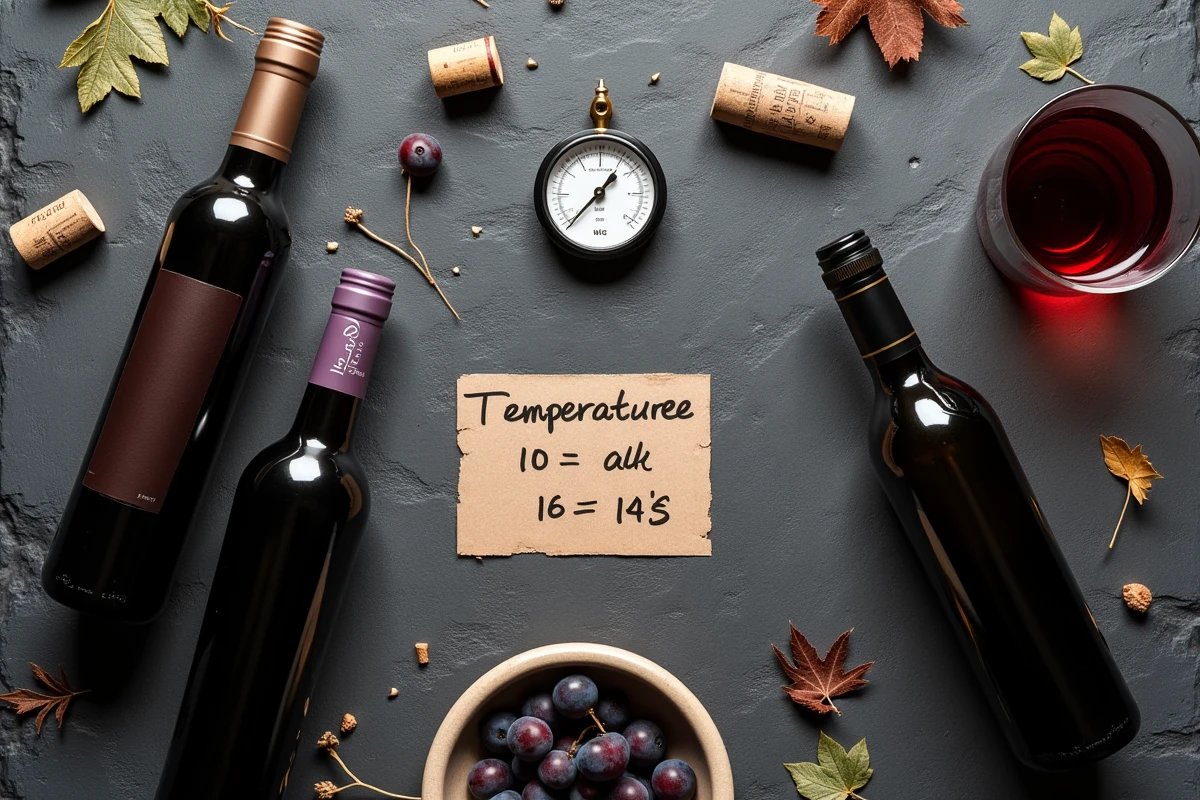
The storage column remains the same regardless of the wine: between 10 and 14 °C for slow and steady aging. The difference lies in the serving temperature, not the storage. To delve deeper into the ideal temperature for storing wine in a cellar, the stability parameter is as important as the absolute value.
The often-cited reference of 12 °C corresponds to the midpoint of this range. It is not magical: a wine stored consistently at 13 °C will age better than a wine kept at 12 °C in a room that fluctuates between 8 and 18 °C over the seasons.
Thermal stability and loss of aromas: what the variations cause
A temperature that is too high accelerates oxidation and pushes the wine towards cooked notes. A temperature that is too low slows down the aromatic development to the point of freezing the evolution of the bouquet. These two extremes are well known.
The most destructive factor remains fluctuation. When the temperature rises, the liquid expands and exerts pressure on the cork. When it drops, the wine contracts and draws in outside air through the cork. This phenomenon of micro-respiration accelerates oxidation irregularly.
- A difference of a few degrees over a day, repeated daily, alters the organoleptic quality faster than a cellar maintained at a constant 15 °C.
- Thermal variations also promote the drying out of corks, increasing the risks of air entry and contamination from external odors.
- Stability takes precedence over the absolute temperature value: regular storage around 13-14 °C better protects the aromas than a setting at 12 °C subjected to frequent fluctuations.
Humidity plays a complementary role in this equation. A rate that is too low dries out the corks and amplifies the effect of thermal variations. A rate that is too high promotes mold on the labels without directly affecting the wine, provided the cork remains intact.
Organic wines and conventional wines facing temperature increases in cellars
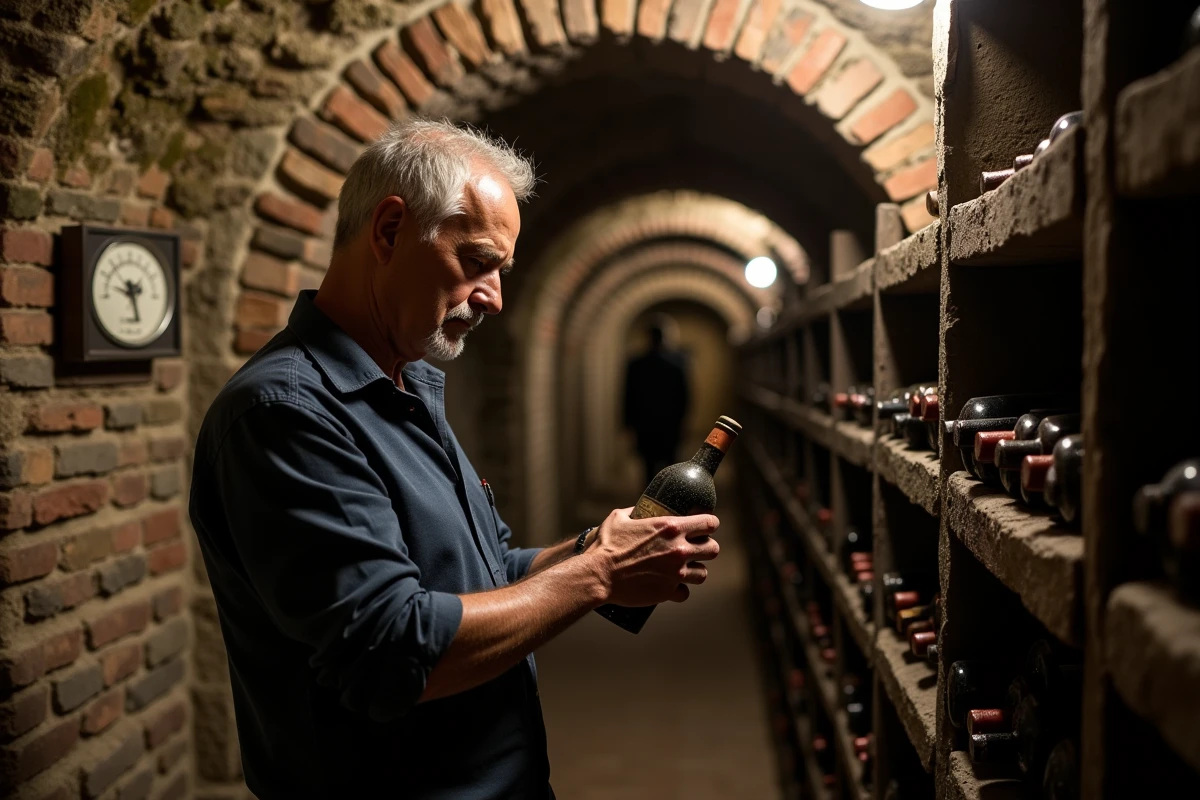
Climate change is altering storage conditions in natural cellars, particularly in Southern Europe and regions where heat episodes are multiplying. According to a report from the OIV published in March 2026, the ideal storage range is tending to be adjusted to 11-15 °C to account for the increasing difficulty of maintaining natural cellars below 14 °C during summer peaks.
Wines from organic farming have a particular sensitivity to these increases. Organic winemaking limits or excludes the addition of sulfites, which act as antioxidants and stabilizers. An organic wine contains less chemical protection against oxidation, making it more vulnerable to the effects of a cellar temperature that exceeds the recommended range.
Measurable consequences on aging
A conventional wine with a higher sulfite content tolerates a temporary heat episode better. Sulfites neutralize some of the oxidation reactions triggered by the temperature rise.
In contrast, an organic wine stored in a natural cellar that regularly reaches 16-17 °C during the summer will see its aromatic profile evolve more quickly. The fruity notes fade, replaced by more evolved characters (dried fruits, underbrush notes) before the wine reaches its optimal tasting window.
This difference does not mean that organic wines do not store well. It indicates that thermal control becomes more critical for low-sulfite bottles. Enthusiasts who build a mixed cellar (organic and conventional) should place organic cuvées in the coolest and most stable area of their storage space.
European regulation and connected cellars
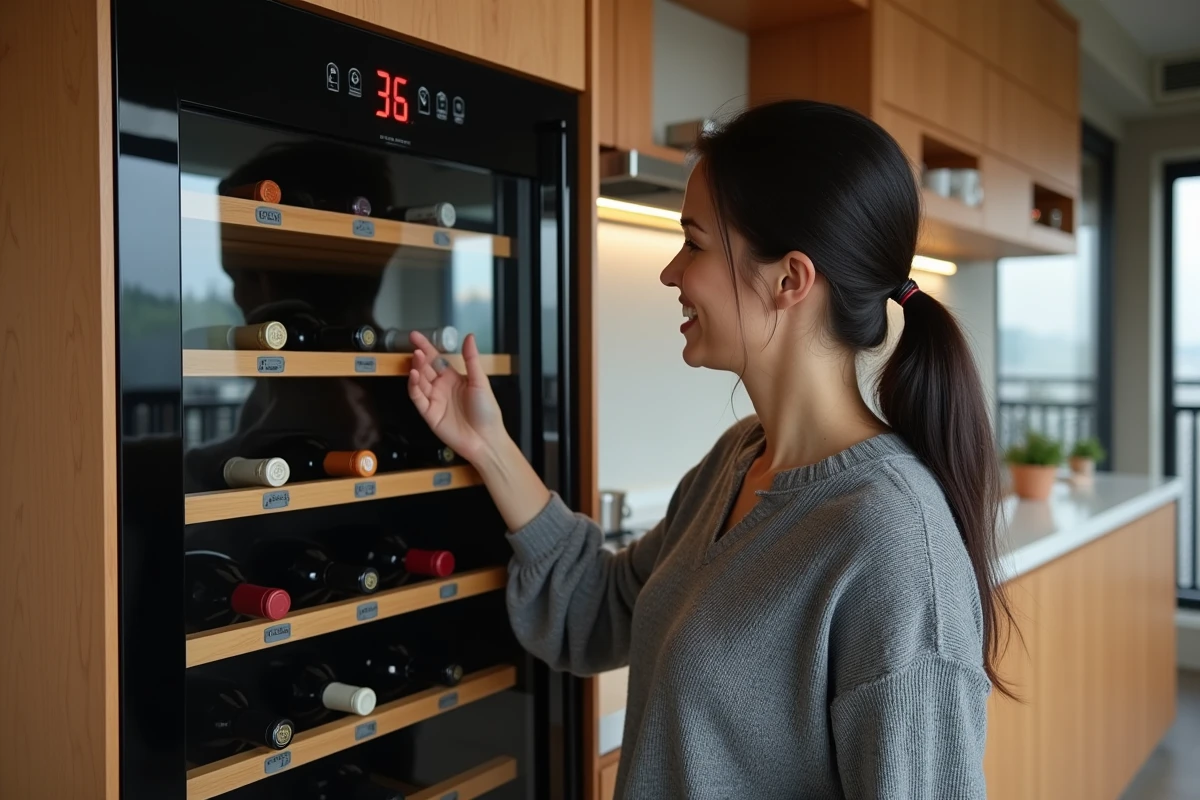
The European Union introduced in January 2026 a thermal tolerance standard of plus or minus 2.5 °C for smart home cellars, according to the Official Journal of the EU. This standard aims to regulate connected devices whose sensors may malfunction and expose bottles to undetected variations.
Wine cellars equipped with IoT modules (temperature sensors, smartphone alerts) have multiplied in recent years. The problem identified by this regulation concerns silent failures: a faulty sensor that displays 12 °C while the actual temperature has risen. The standard now requires a redundant alert system and a maximum documented tolerance margin from the manufacturer.
For natural cellars (buried, without air conditioning), this regulation does not apply directly. However, it provides a useful benchmark: beyond 2.5 °C deviation from the set point, aromas begin to degrade perceptibly on sensitive bottles.
The choice between a natural cellar and an electric cellar thus depends on the local climate and the type of wine stored. A buried cellar in a temperate region remains the best possible environment. In areas exposed to increasingly hot summers, a climate-controlled device with reliable regulation offers a guarantee of stability that geology alone can no longer always ensure.