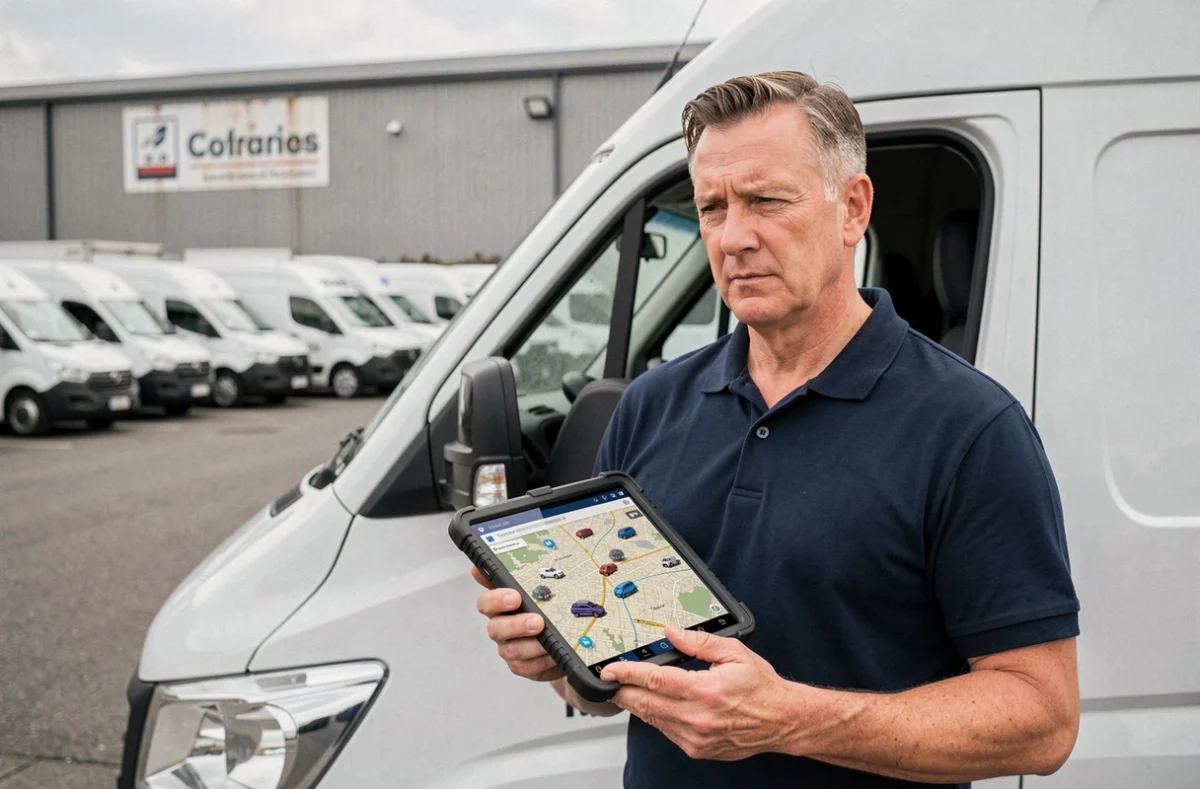
Fleet tracking refers to all the hardware and software devices that allow for the real-time location, analysis, and management of a fleet of professional vehicles. Behind this technical definition lies a system that relies on GPS data transmission, onboard telematics, and centralized processing platforms. Understanding each component of this system is a prerequisite for deriving real benefits in terms of costs, safety, and regulatory compliance.
Geolocation data and CNIL framework: what the law really allows
Before even discussing optimization, the first question to address concerns the legality of the system. The CNIL strictly regulates the geolocation of employees’ vehicles. Three points deserve particular attention, as they are often misunderstood by fleet managers.
Preventing theft does not justify continuous collection of the vehicle’s position. An update to the CNIL doctrine dated May 22, 2025, specifies that the system should be limited to the last known position or activated at the time of reporting. Collecting the complete trajectory under the pretext of anti-theft security exposes the company to sanctions.
GPS data cannot be used to individually verify compliance with speed limits. Even when an employer pursues a road safety objective, speed control through geolocation is prohibited. Safety telematics and disciplinary monitoring are two distinct registers in the eyes of the regulator.
Tracking working hours via geolocation is only permitted as a subsidiary measure, meaning only if no other less intrusive means can measure hours. It cannot therefore serve as the default justification for installing fleet software. To delve deeper into the technical functioning of these devices, fleet tracking and geolocation on Veynes details the mechanisms for data transmission between the onboard unit and the management platform.

Telematics unit and connected vehicle: choosing the right data sensor
The hardware installed in the vehicle determines the quality and granularity of the collected data. Two main categories coexist in the market, and the choice between them conditions what the manager can actually optimize.
OBD unit and standalone tracker
The OBD unit plugs into the vehicle’s diagnostic port. It captures GPS position, as well as engine data: instant fuel consumption, RPM, fault codes. This dual source of information allows for cross-referencing location with the vehicle’s mechanical behavior.
The standalone tracker, powered by a battery, is limited to geolocation. It is suitable for non-motorized assets (trailers, containers, construction equipment). Its autonomy varies depending on the frequency of position updates, which forces a trade-off between tracking accuracy and battery life.
Factory-connected vehicle
Manufacturers now integrate telematics modules into their recent models. These systems natively transmit data to the manufacturer, who can make it accessible via an API. The advantage is the absence of additional hardware installation. The limitation lies in the dependence on the manufacturer for data access and the sometimes restricted scope of shared information.
Optimizing fuel consumption through fleet data
Fuel consumption represents one of the most significant expense items in a professional vehicle fleet. Telematics data offer three concrete levers to reduce it.
- Route analysis and elimination of detours: comparing the adapted theoretical route with the actual journey highlights unnecessary kilometers. Cumulatively across an entire fleet, these discrepancies weigh heavily on the fuel bill.
- Detection of energy-consuming driving behaviors: harsh accelerations, late braking, and prolonged engine idling are identified by OBD sensors. A regular report by driver allows targeting eco-driving training for profiles that will benefit the most.
- Correlation between mechanical condition and overconsumption: a clogged air filter or insufficient tire pressure increases consumption. By cross-referencing preventive maintenance alerts with consumption curves, the manager can schedule interventions before the extra costs accumulate.
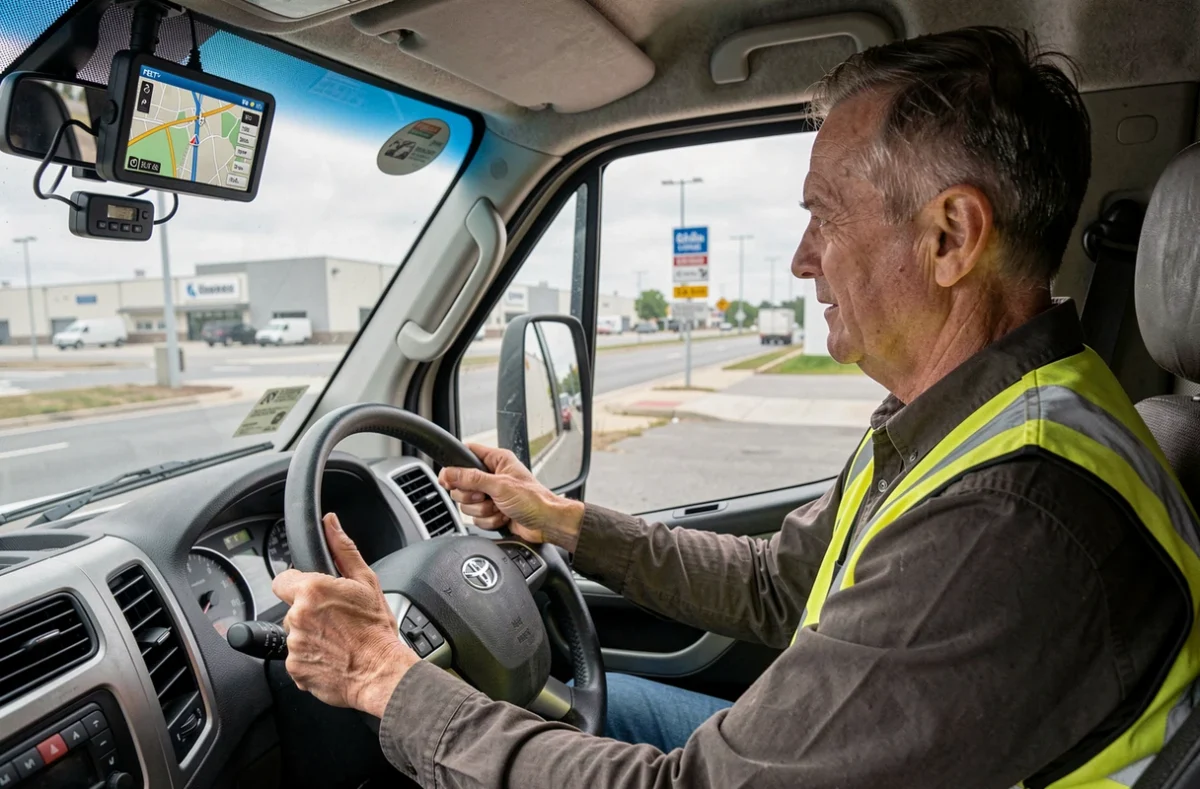
Electric vehicles and charging data: a distinct GDPR angle
The electrification of fleets adds a layer of data that many managers do not anticipate. Charging times, kilowatt-hours consumed, and charging sessions can be linked to an identified driver or a specifically assigned vehicle.
This charging data constitutes a distinct processing from simple geolocation. It reveals personal habits (home charging location, time slots for private use) that fall under a specific GDPR framework. The company’s processing register must separately integrate this purpose, with its own legal basis and retention period.
Operationally, this data allows for optimizing vehicle rotation at shared charging stations and identifying drivers whose usage profile exceeds the real autonomy of the assigned model. The manager can then reassign vehicles based on daily mileage needs rather than a hierarchical chart.
Preventive maintenance driven by telematics
Maintenance represents the second area where fleet data concretely changes practices. Transitioning from a fixed schedule (oil change every X months) to a trigger based on actual usage reduces both unnecessary interventions and avoidable breakdowns.
The OBD unit relays engine fault codes in real time. A warning light in a vehicle isolated on a construction site can be addressed before the driver operates for several days with an anomaly. Centralizing these alerts on a single platform allows the fleet manager to prioritize interventions based on severity and vehicle availability.
Telematics also makes the actual usage rate of each vehicle visible. A vehicle that only operates a few days a month incurs insurance, parking, and depreciation costs without generating value. Identifying underutilized vehicles allows for reducing fleet size without affecting operations.
Fleet tracking is not just a dot on a map. The value of the system lies in the intersection of location, engine data, driving profiles, and regulatory constraints. The CNIL update of May 2025 reminds us that this data collection has precise legal limits, and compliance is not optional, even for companies with only a few vehicles.