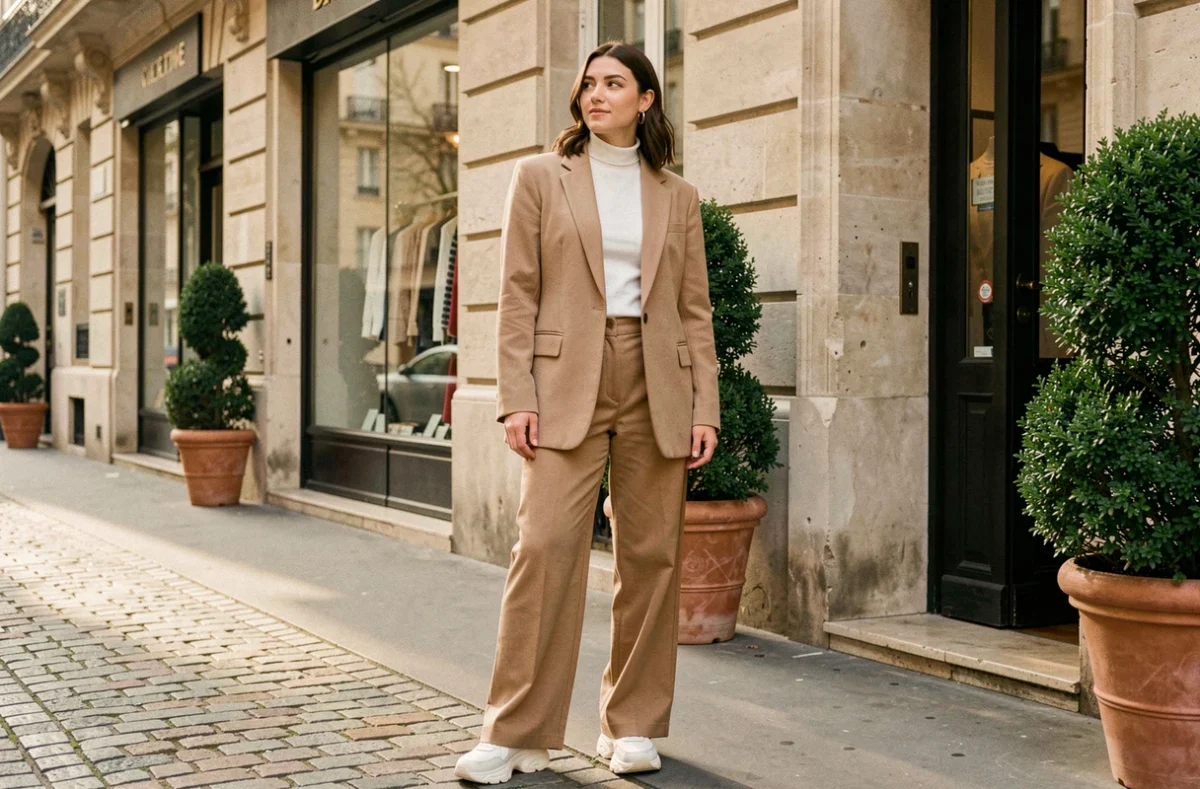
The autumn-winter 2026 collections confirm a shift that has been underway for several seasons: silhouettes are elongating, mono-fiber materials are gaining ground, and the European regulatory framework is reshaping clothing selection criteria. We are observing an increasing gap between fashion trends relayed by social media and the technical constraints now weighing on garment design.
Mono-material and the end of fiber blends: what’s changing in the 2026 collections
The revised European directive on textile waste, which came into effect on October 16, 2025, imposes an expanded financial responsibility on brands for the end-of-life of their products. This regulatory pressure has a direct effect on collections: mono-fiber garments are becoming an industrial advantage, not just a marketing argument.
A pair of pants made from a cotton-polyester-elastane blend costs more to recycle than a pair made from pure cotton. Brands that anticipate the extended producer responsibility (EPR) schemes are favoring simpler weaves. The visible result in stores: more pieces in virgin wool, linen, or unblended cotton.
For consumers, this translates into more robust and repairable clothing. A dense cotton jean without elastane holds up better at the seams than a stretch fabric. Repairability is becoming a style criterion as much as durability.
Fashion enthusiasts following these developments will find regular analyses of pieces and brands aligned with these new requirements on the Omniz fashion site.

Eco-friendly claims in fashion: the greenwashing directive changes the game
The directive (EU) 2024/825 now regulates environmental claims in fashion. Vague terms like “eco-friendly,” “conscious,” or “green” without verifiable proof are prohibited. Private environmental labels must be based on independent certification to remain compliant.
For an informed buyer, this regulation paradoxically simplifies choices. A brand displaying an uncertified label exposes itself to sanctions. Collections that survive this filter offer real traceability, not just a reassuring logo on the label.
We recommend systematically checking if a textile label is backed by a third-party organization. Certifications linked to regular audits (and not just a simple paid membership) remain the only reliable ones. This vigilance applies to both major retailers and independent brands.
Trendy autumn-winter silhouettes: long cuts, leather, and controlled volumes
The spring-summer 2026 fashion shows have laid the groundwork for an aesthetic that continues into autumn. Leather, micro cuts, and saturated red palettes dominate the proposals from fashion houses. The leather midi skirt, high-waisted straight pants, and structured dress form the foundation of a modern wardrobe.
Key pieces to prioritize this season
- The wide pants in unblended wool, worn with a high belt, are gradually replacing slim jeans in urban wardrobes. Its straight or slightly flared cut elongates the silhouette without sacrificing comfort.
- The short colored jacket, spotted on the spring runways, is available in an autumn version with heavier materials. It structures a look based on barrel jeans or beige pants.
- The oversized thick-knit sweater, ideally in mono-fiber wool or cashmere, remains a profitable basic. It can be worn tucked into high-waisted pants or loosely over a pleated skirt.
- The shirt dress in thick cotton or poplin, worn open over a fine turtleneck, offers an alternative to complex layering.
Colors and materials to remember
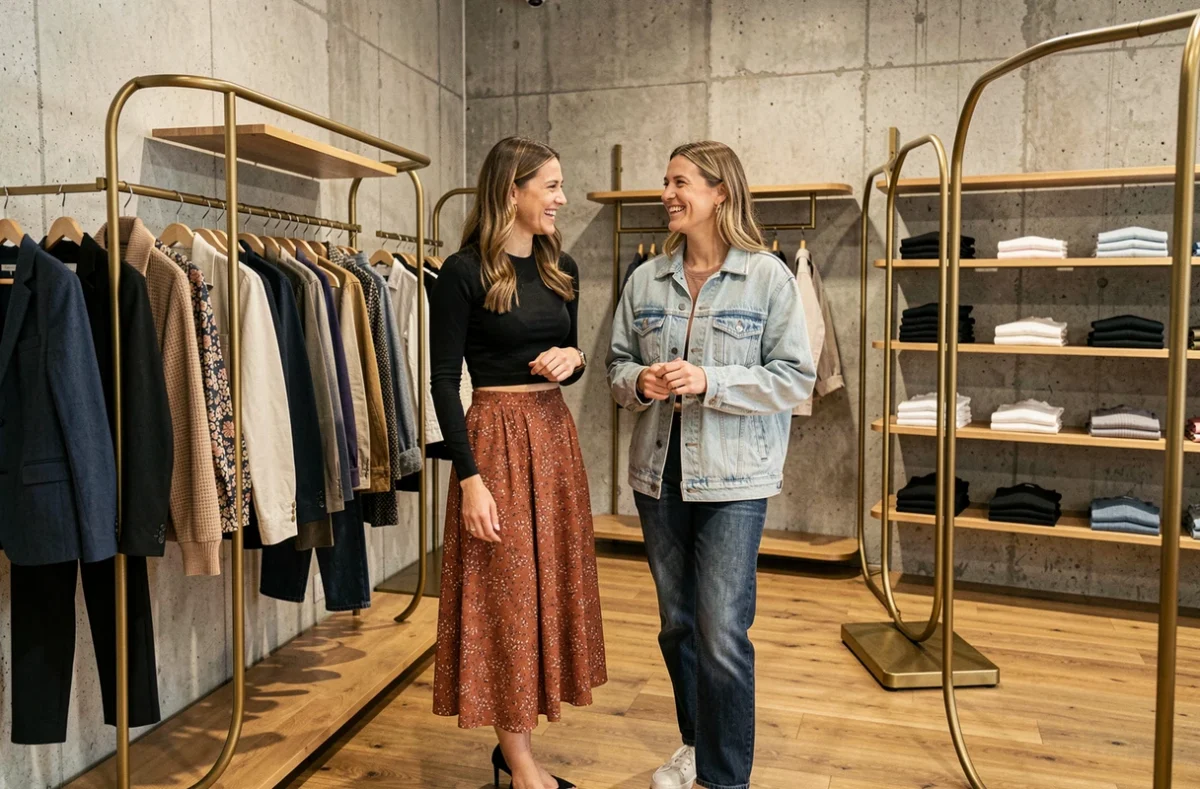
Bright red, omnipresent in the spring-summer collections, remains relevant in autumn in more muted forms: deep burgundy, brick red, terracotta. Butter yellow, very prominent in spring, gives way to mustard and ochre tones.
In terms of materials, leather (or its certified plant-based alternatives) is prominent in skirts, jackets, and accessories. Linen and dense cotton replace synthetic blends in wardrobes anticipating European standards.
Digital textile passport: a useful tool for an informed look
The digital product passport (DPP) is progressing in the textile sector, even though it is not yet a widespread obligation for all garments. Pioneer brands are already integrating a QR code on their labels, providing access to exact composition, country of manufacture, and detailed care instructions.
For the consumer, this passport transforms the purchasing act. Checking the actual composition of a garment before buying avoids disappointment after washing. A pair of pants labeled “cotton” but containing a significant portion of polyester will not age the same way.
We observe that brands adopting the DPP early attract a more loyal clientele. Transparency in the production chain is becoming a positioning marker, just like cut or color palette.
Building a modern look: concrete trade-offs between style and regulation
Embracing the 2026 fashion trends is not just about piling on pieces spotted on the runways. The European regulatory context encourages more thoughtful choices. The ban on the destruction of unsold goods, which will apply to medium-sized companies starting in 2030, is already promoting resale and donation. Brands must prioritize these channels over recycling through destruction.
In practice, this means that durable pieces with reimagined classic cuts are gaining value in the second-hand market. A well-cut short trench in thick cotton resells better than a trendy piece in fragile blended fabric.
Investing in solid technical basics and pairing them with one or two standout pieces of the season remains the most effective strategy. A wardrobe built around five to seven versatile pieces absorbs trend variations without rapid obsolescence. Modern style in 2026 is one that lasts three seasons without losing its shape or relevance.