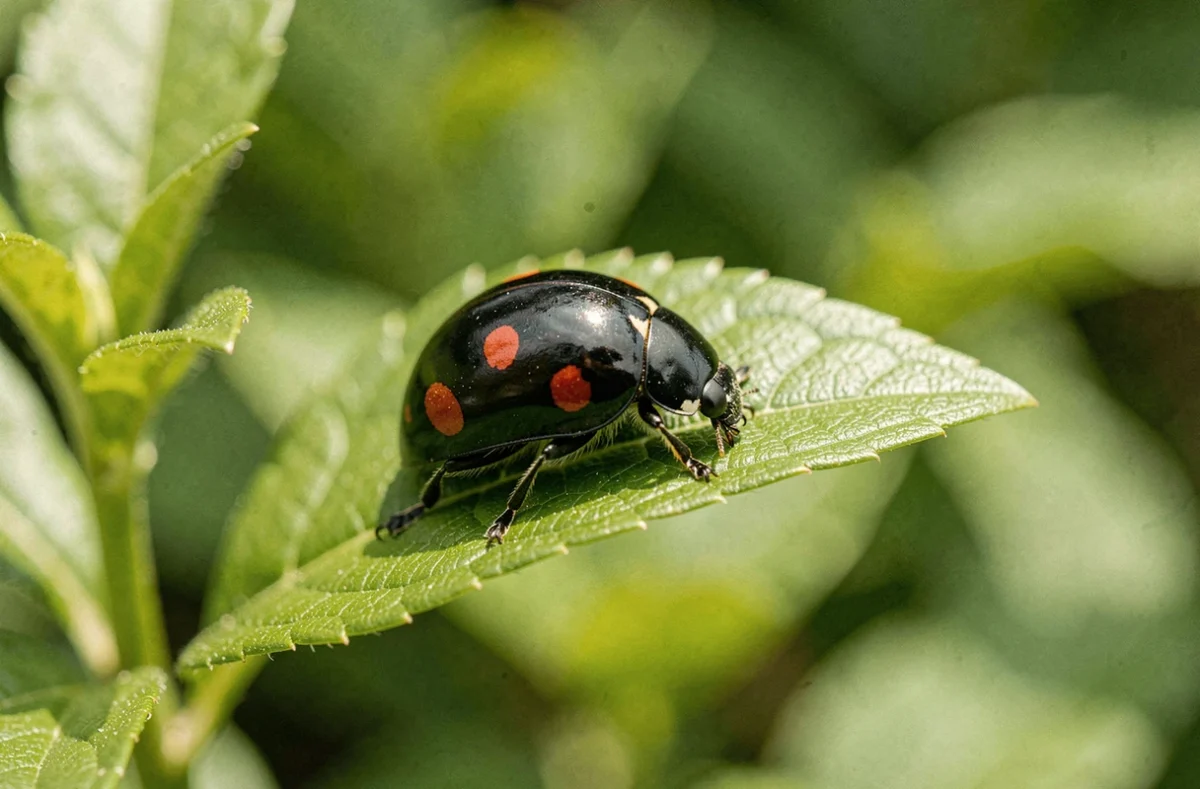
A black ladybug with red spots on its back catches the eye because it reverses the usual color pattern. Before assigning it a spiritual meaning or seeing it as a sign of good luck, one point is worth making: color alone is not enough to identify the species.
The black pattern with two large red spots is a known form of the harlequin ladybug (Harmonia axyridis), but other physical features are needed to confirm this identification. That distinction determines what comes next, both ecologically and practically.
Black ladybug with red spots or native ladybug: a comparison of distinguishing features
It is easy to confuse a dark form of a native species with the harlequin ladybug. The table below brings together the most reliable visual features, beyond the simple color of the wing cases.
| Feature | Harlequin ladybug (Harmonia axyridis) | Two-spot ladybug (Adalia bipunctata) | Seven-spot ladybug (Coccinella septempunctata) |
|---|---|---|---|
| Size | Larger than most native species | Smaller | Medium-sized |
| Pronotum pattern | M-shaped black marking on a white background | Black pronotum with a pale border | Black pronotum with two white spots |
| Wing case color | Highly variable: red, orange, or black with red or white spots, or no spots | Red with 2 black spots, or black with red spots | Red with 7 black spots |
| Autumn behavior | Mass gatherings on sunny walls and entry into homes | Discreet overwintering, rarely in large numbers | Overwinters outdoors, under bark |
The pronotum is the most reliable distinguishing feature. A black ladybug with red spots whose thorax has an M-shaped marking is very likely a harlequin. Without this marking, it may be a melanistic form of Adalia bipunctata, a native species that poses no ecological problem.
For more on the meaning of the black ladybug with red spots from a symbolic and cultural perspective, combining this with entomological information helps avoid jumping to conclusions.
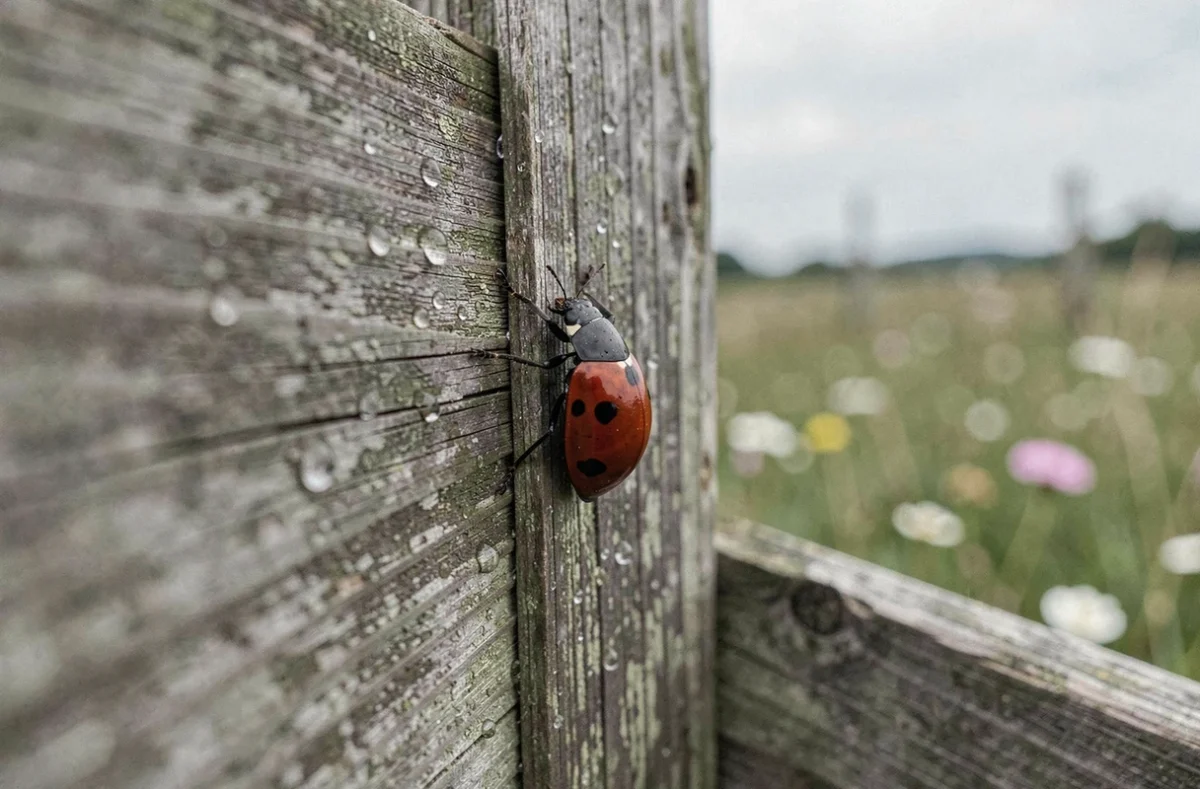
Harlequin ladybugs in the home: real risks and how to respond
In autumn, the harlequin ladybug seeks sheltered places to spend the winter. It gathers on sun-exposed walls, then enters through windows, vents, and gaps. This clustering behavior is characteristic of the species and explains why dozens of individuals can appear in a room within just a few days.
Allergies and defensive secretions
Asian ladybugs release allergenic proteins that can cause respiratory or skin symptoms in sensitive people. When handled, a harlequin may also give a slight pinch and leave an unpleasant-smelling yellowish liquid on surfaces, produced by its defensive secretions (reflex bleeding).
Killing the insects indoors is not the best strategy: crushing them releases more of these secretions and can stain walls. Here is a more effective approach:
- Vacuum up the ladybugs using a vacuum cleaner with a stocking or cloth over the nozzle, then release them outdoors away from the wall
- Seal entry points (window seals, vents fitted with fine mesh) before the autumn clustering period
- Avoid using pesticides, which also kill native species that benefit the garden
This mechanical approach protects both the home and local biodiversity without resorting to chemicals.
Ecological impact of the harlequin ladybug on native species
The harlequin ladybug does more than compete with native species for aphids. It also eats the eggs and larvae of other ladybugs, a form of intraguild predation that accelerates the decline of some native populations, such as Adalia bipunctata.
This issue extends beyond the garden. In vineyards, harlequin ladybugs mixed in with grape clusters during harvest release their defensive secretions into the must. These secretions can affect the taste of the wine, a documented problem that has led some winegrowers to adapt their harvesting methods.
Encouraging native ladybugs without chemical intervention
Creating winter shelters (woodpiles, dense hedges, insect hotels) benefits native species more than the harlequin, which prefers man-made structures. Maintaining a variety of plants in the garden attracts a range of prey and reduces the competitive pressure exerted by this invasive species.
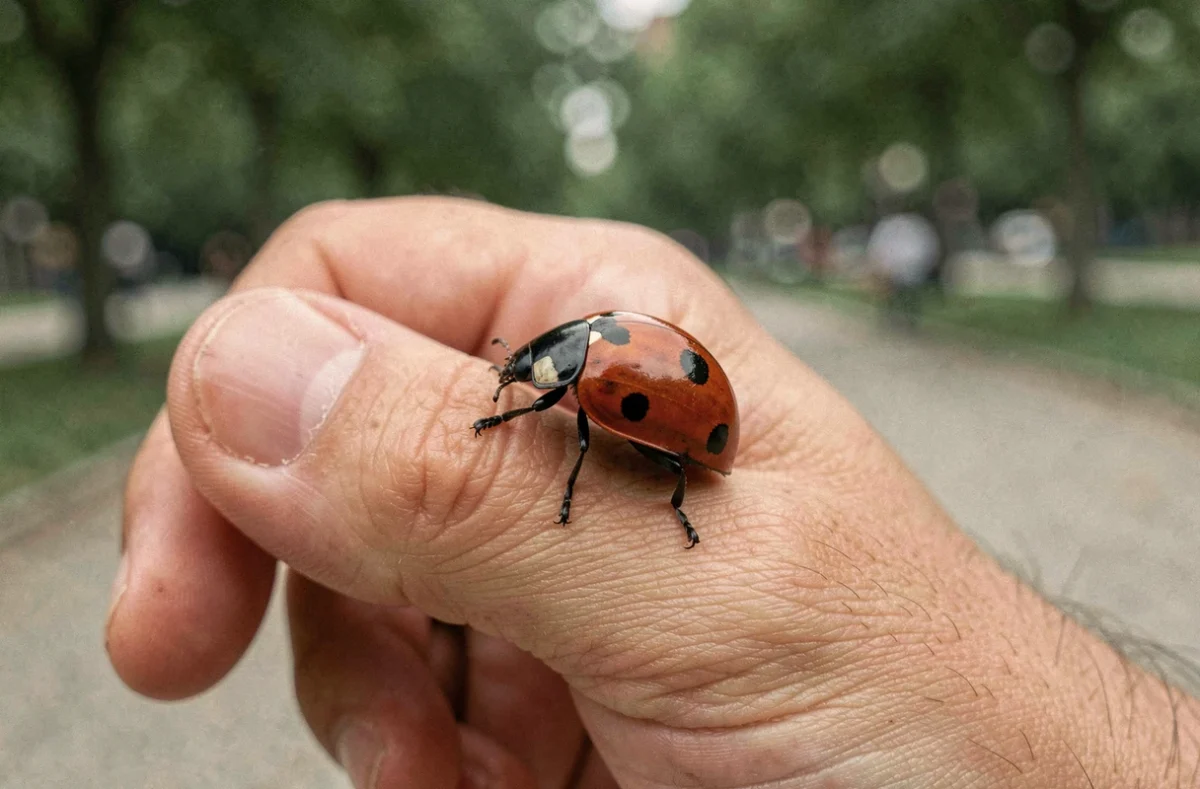
Symbolic meaning of the black ladybug: what traditions say
The symbolic significance of the ladybug spans many cultures. In Europe, the ladybug has been associated with protection and good luck since the Middle Ages, when farmers saw its presence as a sign that crops would be spared from pests. Its connection with the Virgin Mary gave the insect its English name (ladybird, ladybug) and its French nickname, “God’s little creature.”
The color black does not cancel out this positive symbolism in most traditions. Instead, it adds a dimension of transformation or heightened protection. Some interpretations associate the dark background with resilience and the red spots with vitality.
Assigning a specific spiritual meaning to an encounter with an insect is a personal belief that cannot be verified. What can be measured, however, is the species’ identity and ecological role. Identifying the insect before attributing a message to it helps avoid mistaking a beneficial visitor for a species that warrants careful management.
The black ladybug with red spots brings together two parallel interpretations: a cultural symbol of good luck and protection, and a biological indicator whose precise identification determines the appropriate response. The M-shaped pronotum remains the most reliable way to distinguish the harlequin from a harmless native species, and that distinction changes everything, from household management to its impact on the garden.