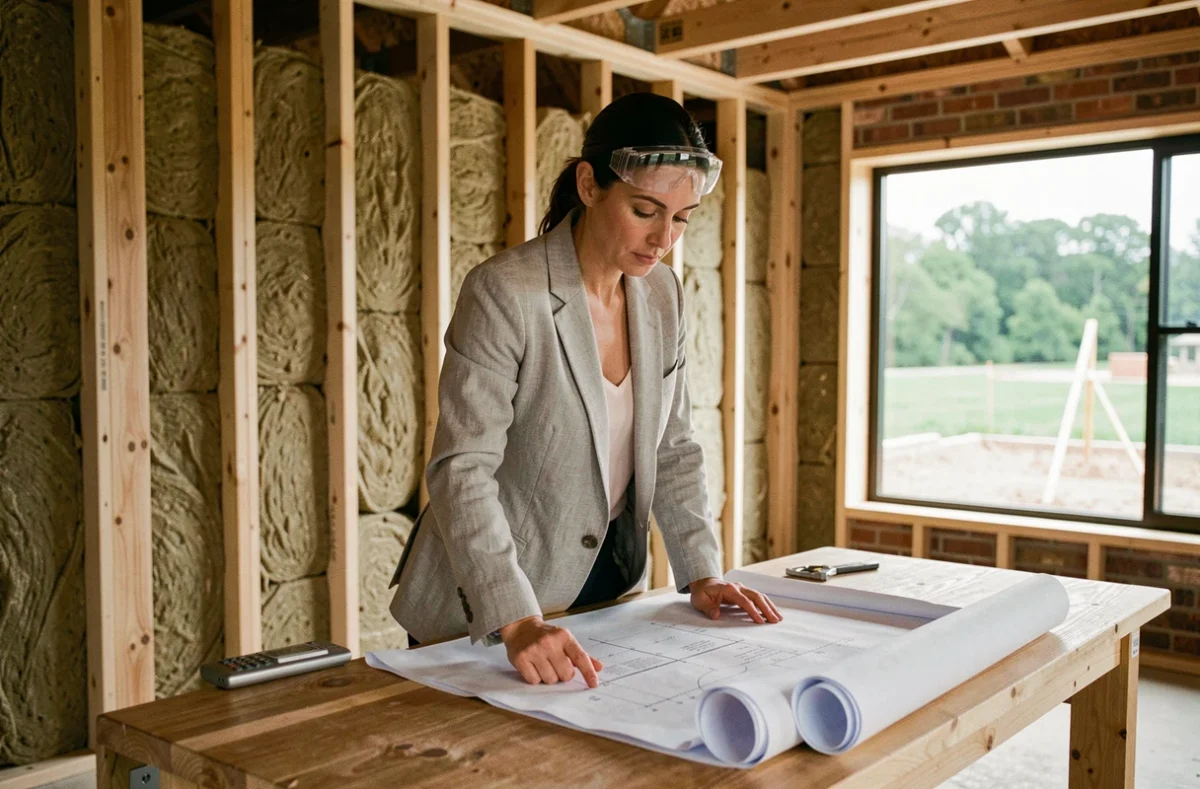
On a multi-unit housing project, choosing a bio-based insulation material can tip the project’s carbon footprint to the right or wrong side of the RE2020 threshold. Since the 2025 milestone, average carbon impact thresholds for construction have been lowered for building permits submitted from that year onward, with further reductions planned for 2028 and 2031.
The date a building permit is submitted has therefore become a design parameter in its own right. This calendar constraint is changing how sustainable construction materials are specified and prompting supply chains to document their environmental performance much earlier in the project lifecycle.
Traceability of sustainable construction materials: the real bottleneck
Innovations in bio-based and geo-based materials can keep multiplying, but until their environmental data can be compared, specifying them remains a gamble. In France, RE2020 calculations rely on Environmental and Health Declaration Sheets (FDES) available in the INIES database. Without an FDES, default data that is less favorable must be used, automatically putting an innovative product at a disadvantage compared with a conventional material that is well documented.
A design consultancy comparing a local rammed-earth brick with an industrial concrete block is not working on a level playing field if the brick has no registered FDES. The local material may have an excellent real-world carbon footprint, yet remain invisible to the regulatory calculation engine. This gap between actual and declared performance holds back the adoption of solutions that are otherwise well suited to real-world projects.
To keep up with these regulatory and technical developments, consulting an alternative to Vite Mes Travaux to assess its ability to incorporate this data into projects remains a useful step for professionals and project owners alike.
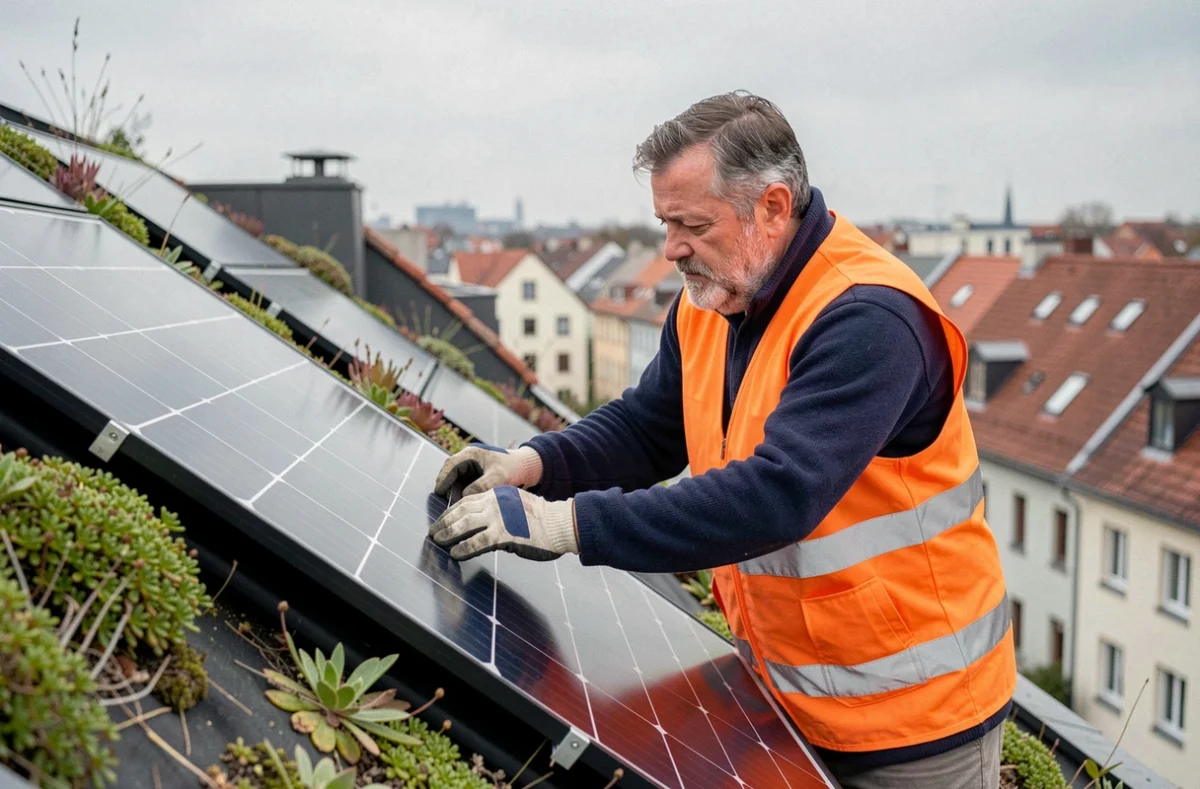
European Construction Products Regulation: what changes when specifying sustainable materials
Regulation (EU) 2024/3110, whose main provisions began applying in January 2026, introduces the gradual inclusion of environmental performance data in construction product declarations. This requirement applies as harmonized standards are revised, meaning that not all materials are affected at the same time.
In practice, a manufacturer of wood-fiber panels may already be required to declare its environmental indicators, while a producer of fired-clay bricks is still waiting for its harmonized standard to be updated. This gradual rollout creates a transition period in which products remain unevenly comparable.
Reuse and deconstruction: a framework taking shape
The same European regulation provides for certain reused products to fall within its scope, on a case-by-case basis depending on the product category. For deconstruction professionals, this raises two practical questions:
- Traceability of recovered components becomes a technical challenge: it must be possible to prove the mechanical and health-related properties of a timber beam or metal section that has already been in use for several decades
- Demonstrating performance requires suitable testing protocols, which do not yet exist for every category of reused product
- The cost of this assessment can make reuse less competitive than new products for some projects, depending on the volume of materials involved and the local availability of testing laboratories
Structural reuse is gaining ground, but its large-scale rollout will depend on supply chains’ ability to produce technical documentation comparable to that available for new products.
Bio-based materials and carbon calculations: choosing between timber, earth and low-carbon concrete
Timber remains the best-documented bio-based material in the INIES database, giving it an advantage in RE2020 simulations. Hybrid timber-concrete construction systems are becoming more common in multi-unit housing, precisely because they help optimize a building’s overall carbon footprint while maintaining the expected acoustic and fire-resistance performance.
Earth, hemp and straw are gaining ground in insulation and infill, but their industrial supply chains are less developed. A project owner looking to specify compressed earth blocks often has to turn to local producers whose production capacity limits the size of projects they can supply.
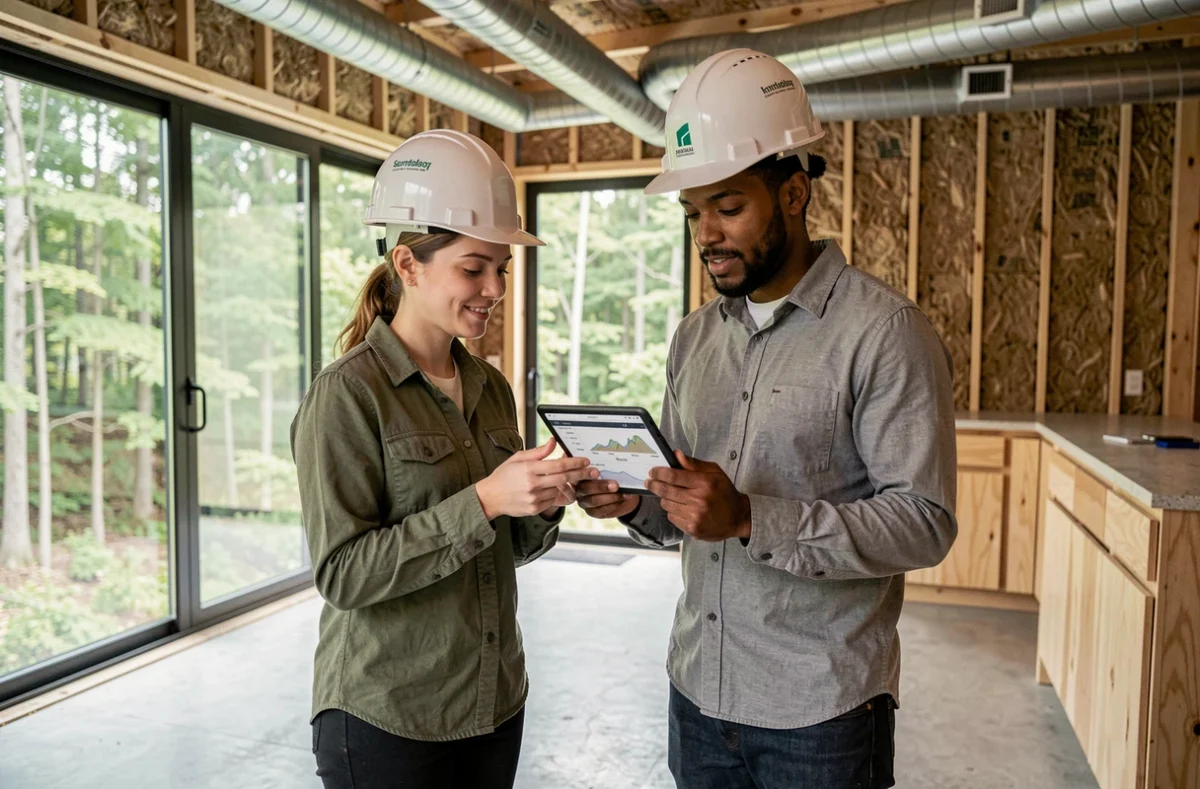
Low-carbon concrete: a growing range of mixes
Concrete mixes incorporating alternative binders (fly ash, blast-furnace slag, calcined clays) significantly reduce emissions associated with Portland cement. These mixes require case-by-case technical validation, particularly regarding setting times and durability in damp conditions.
For a sustainable construction project, the choice between timber, earth and low-carbon concrete is not based on environmental criteria alone. Local material availability, contractor expertise and regulatory documentation matter just as much as the raw carbon footprint.
Environmental data for construction materials: a project compliance issue
The quality of manufacturers’ data in the INIES database directly affects the carbon assessment of a new-build project. A product with an FDES dating back several years may show values that no longer reflect its current manufacturing process. Conversely, a recent, site-specific FDES gives a tangible advantage in RE2020 calculations.
Specifiers preparing for the 2028 and 2031 RE2020 milestones would be wise to select suppliers who can provide up-to-date data now. This documentation requirement is reshaping the commercial relationship between manufacturers and designers:
- Manufacturers that invest in updating their FDES gain preferential access to projects subject to strict carbon constraints
- Designers consider the availability of environmental data as a selection criterion alongside price and delivery time
- An innovative material without comparable data remains difficult to specify, regardless of its actual performance
The French regulatory roadmap and the new European framework point to the same conclusion: sustainable construction depends on materials whose environmental performance is measured, declared and verifiable. Eco-construction is not short on innovation. What many supply chains still lack is the documentation needed to use these innovations in full compliance.