A shutter that won’t close properly, a stone wall that seeps after three days of rain, a living room where the stove warms one corner and leaves the other freezing: decorating a country house is nothing like decorating a new-build apartment.
Older buildings come with their own constraints, and ignoring them means covering up a problem with décor. Creating a warm, welcoming country home starts with understanding what the walls, floors and windows can accommodate before choosing a fabric or a paint colour.
Damp and ventilation: assess the problem before decorating
In a long farmhouse or a smallholding, dark marks at the bottom of a wall are more than just an eyesore. Repainting or covering them with panelling without identifying the cause (rising damp, condensation or a leak in the roof) hides the problem and makes it worse. The building must be assessed before choosing any finishes.
When single-glazed windows are replaced with more airtight ones, natural air circulation decreases. Without suitable ventilation, indoor humidity rises, the mortar between the stones turns black and fabrics start to smell musty. Before installing a system, check the existing air inlets, the damp rooms and whether there’s space to run ductwork. In a house with thick walls and few suspended ceilings, a decentralised ventilation system may be more practical than a central one.
At Ma Maison De Campagne, you’ll find first-hand accounts of this kind of renovation, where thermal comfort goes hand in hand with respect for the character of an older building. It’s a good place to start when setting your priorities.
Heating follows the same principle: replacing a boiler without addressing insulation or ventilation can leave you with an oversized appliance or disappointing comfort. Insulation, ventilation and heating should be planned together, not one after another.
Natural materials and finishes suited to older buildings
A country house often has its own distinctive materials: exposed stone, terracotta floor tiles, oak or chestnut beams, and lime plaster. It’s tempting to cover everything up for a “fresh new look”. But that means losing what gives the room its character.
What to preserve and what to treat
Sound stone walls need to breathe. Repoint them with lime mortar (not cement, which prevents water vapour from escaping) and brush them clean. The result has a texture and depth that no wallpaper can imitate. If the beams are structurally sound, clean them and let them age rather than sanding them back to bare wood: a natural patina is better than a glossy varnish.
Old terracotta tiles, with their uneven, porous surfaces, can be treated with linseed oil or wax. They don’t respond well to harsh chemicals. Their warm tones, somewhere between terracotta and ochre, make a space feel cosier without any extra decorative touches.
Wood as a unifying element
Wood remains central to country-style décor: a solid oak farmhouse table, raw-wood shelves in the kitchen, or an old floorboard floor sanded and oiled in the living room. A cohesive look comes from choosing similar wood species and tones, rather than matching everything perfectly. A second-hand walnut cabinet works well with a beech worktop if both are mid-toned—not too pale or lacquered.
Country living room and kitchen: different rooms, different needs
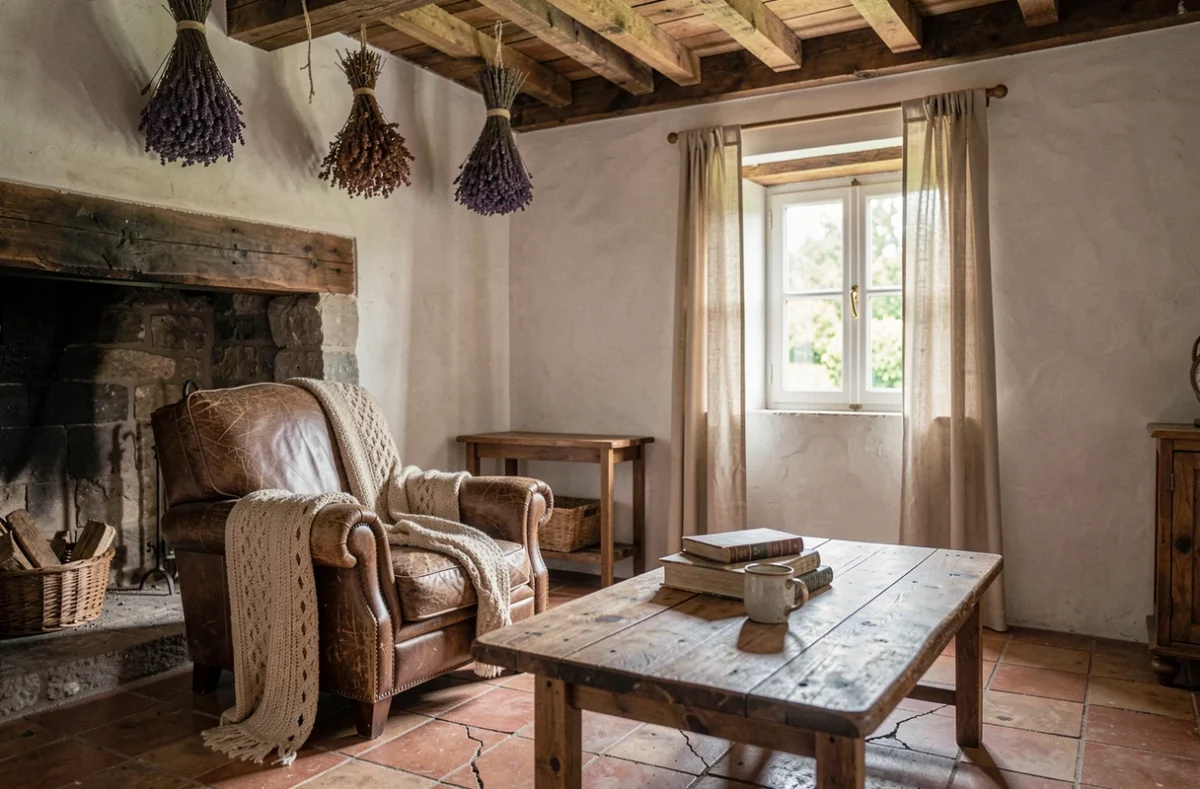
The living room in a country house often revolves around a heat source: an open fireplace, a wood-burning insert or a stove. This is the natural focal point for the furniture. Arrange the sofa and armchairs to face it, rather than a blank wall or a screen.
- A sofa in heavyweight linen or washed cotton, in an ecru or greige shade, stands up to heavy use (family weekends, dogs jumping up) better than delicate velvet.
- Wool or hemp cushions with removable covers add texture without introducing too many patterns.
- A jute or sisal rug defines the living area in an open-plan room while complementing terracotta tiles or stone flooring.
- A ceiling light won’t illuminate a room with a low ceiling very well. Instead, use table lamps (ceramic or turned wood) in different spots, with warm-toned bulbs.
A country kitchen: practical yet full of charm
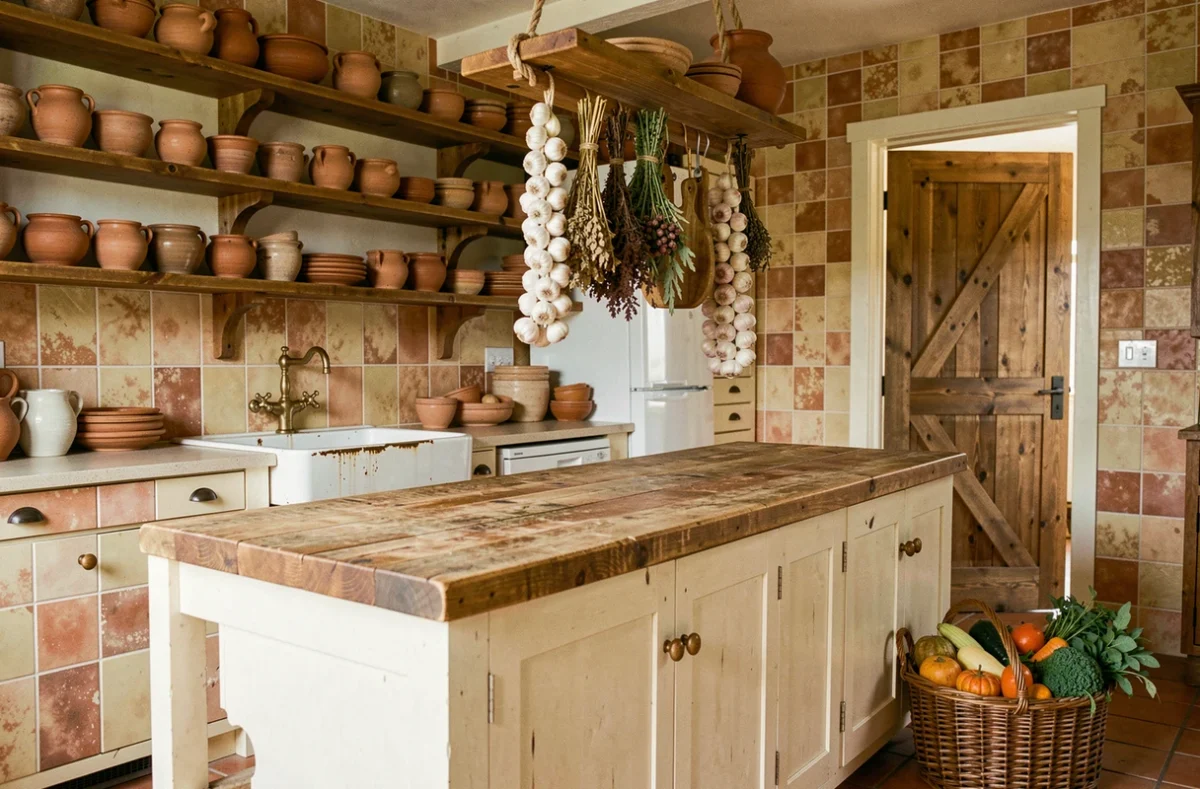
The kitchen is where country style comes most naturally, as long as you don’t turn it into a museum. A fireclay or cast-stone sink is a great alternative to stainless steel in an older home, but make sure the cabinet beneath it can support the weight.
Choose base units with solid-wood or painted MDF fronts in a matte shade (sage green, blue-grey or off-white). Aged brass or wrought-iron handles enhance the look without turning it into a historical re-creation. An oiled solid-wood worktop ages beautifully but needs regular care; natural stone (granite or Burgundy stone) is more resistant to stains when properly sealed.
A colour palette for a warm country feel
In a country house, the colour scheme should take its cue from the existing building, not an abstract colour chart. If the walls are blonde stone, complementary shades include warm white, linen and soft ochre. If the stone is grey (granite or slate), add warmth with rust, burnt-earth or mustard-toned textiles.
A reliable rule for country-style interiors is: keep large surfaces neutral and add colour through accessories and textiles. Paint plastered walls lime white or sand-coloured. Curtains, cushions, crockery and light fittings provide the accents. Changing the look with the seasons then means swapping a cushion cover, not repainting a room.
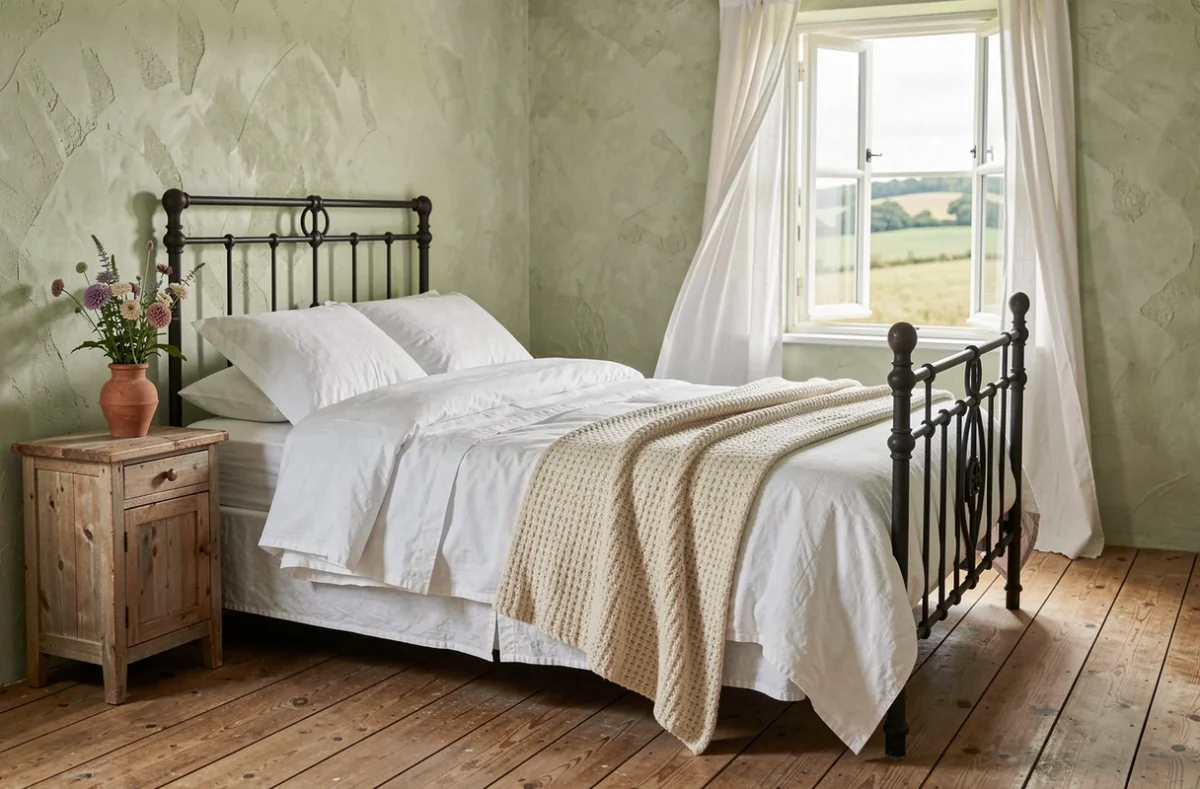
- Spring and summer: natural linen, white cotton, touches of almond green or lavender blue.
- Autumn and winter: chunky wool, cable-knit throws and rich colours (burgundy, forest green, caramel).
- All year round: stoneware or handmade earthenware displayed on an open shelf makes for lasting decoration.
A successful country home doesn’t look like an exact copy of a magazine photo. It reflects the character of its building, the flaws that have been fixed and the original materials. Comfort starts with sound walls, fresh air and evenly distributed warmth. Décor comes next, building on that solid foundation with simple, lasting choices.