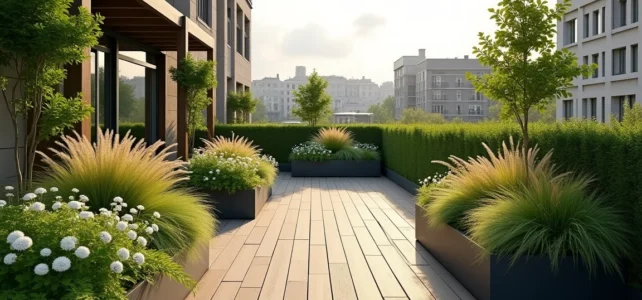
The landscaping of a rooftop imposes constraints that a ground garden ignores: load capacity of the roof, exposure to wind, waterproofing, drainage. These parameters condition every choice of materials, substrate, and furniture. Here are ten concrete techniques to transform a rooftop into a high-performing and sustainable outdoor space.
1. Bioclimatic solar pergola integrated into the landscape
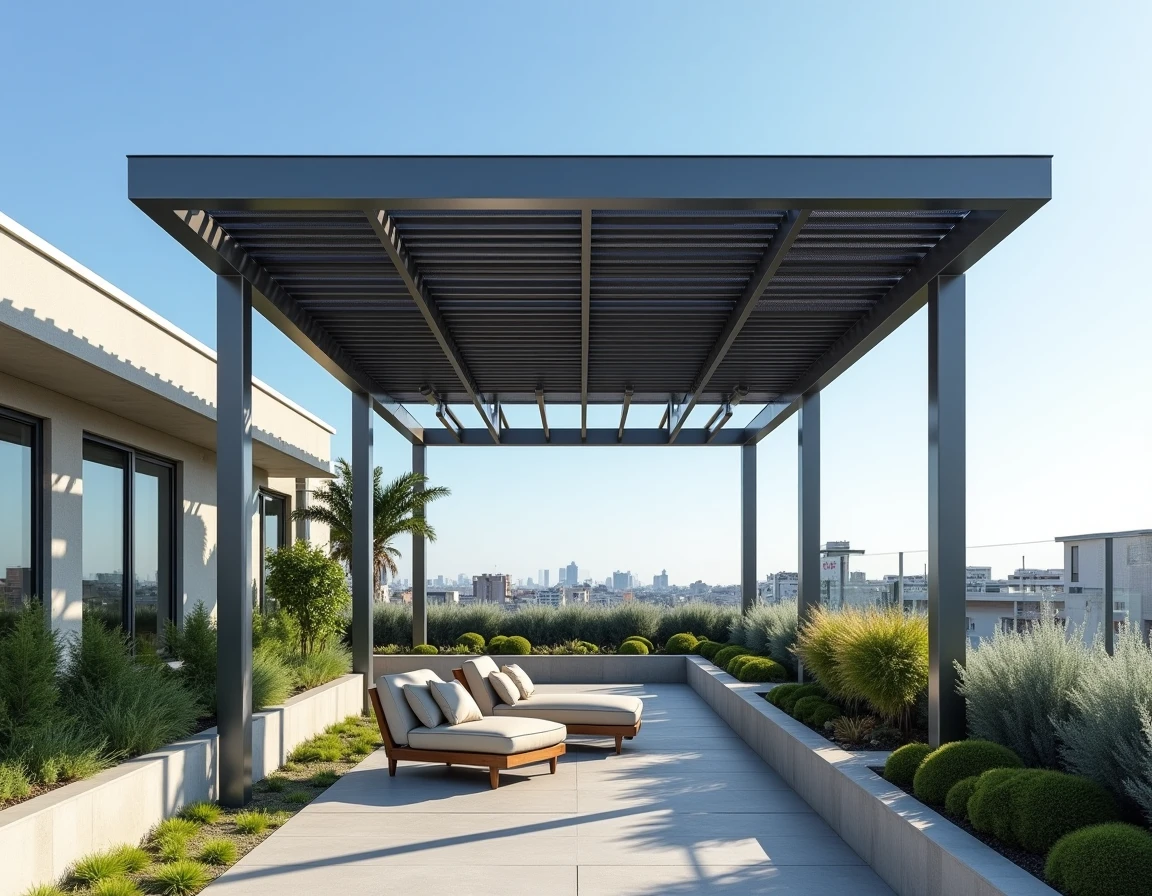
The solar pergola combines two functions in the same footprint: shading with adjustable slats and energy production for lighting, outlets, and the small outdoor kitchen. In dense urban areas, the roof often remains the only exploitable solar resource, making this device particularly relevant.
We recommend aligning the orientation of the slats along the south/southwest axis and planning for a waterproof electrical box at the base of the post. The plant cover on the posts (star jasmine, trachelospermum) softens the metal structure without overloading the load-bearing floor.
To explore more rooftop landscaping ideas, the combination of pergola and vegetation serves as a solid starting point before working on the lower layers.
2. Lightweight substrate and multilayer drainage for green roofs
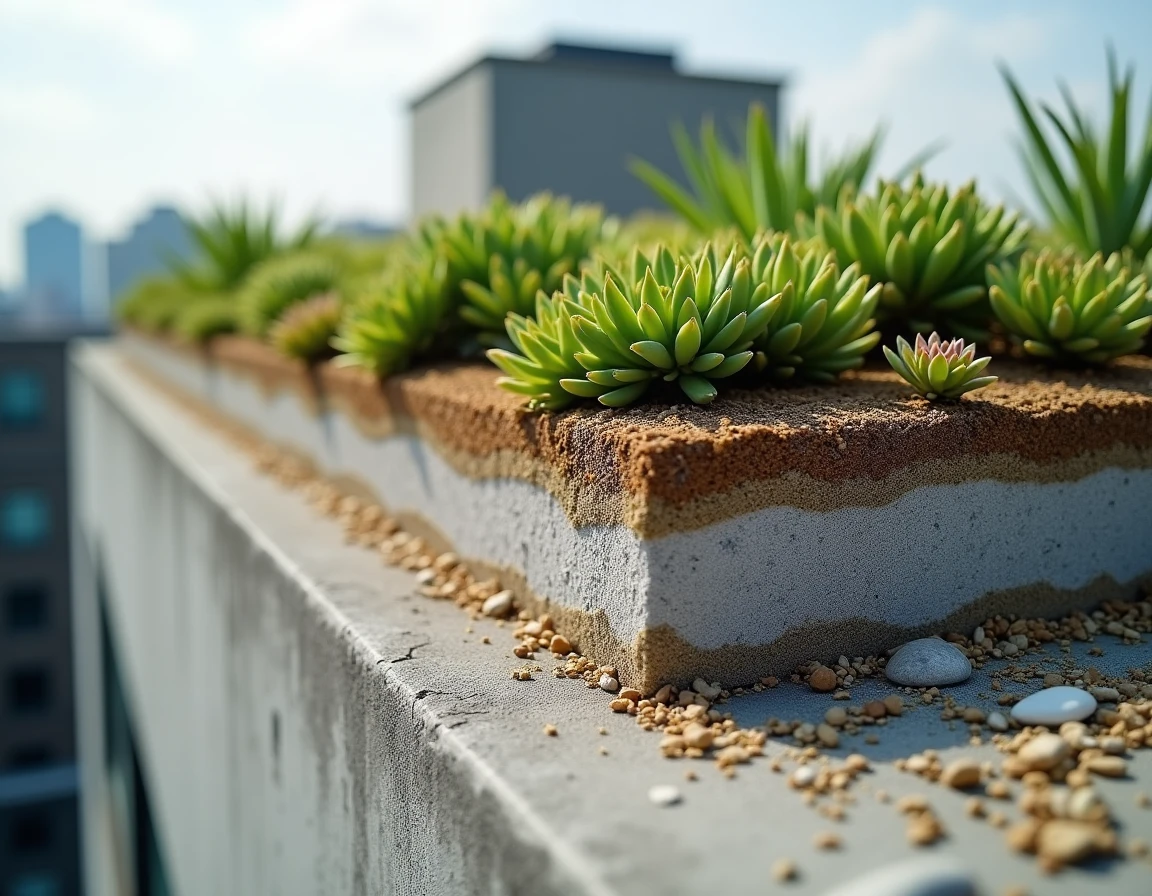
The choice of substrate determines the survival of plants and the durability of the waterproofing. A mix of pumice, perlite, and compost significantly reduces weight compared to traditional topsoil while maintaining good water retention.
The layering of a drainage mat, geotextile filter, substrate, and mineral mulch forms a complex that protects the waterproof membrane from roots and puncturing. Checking the load capacity with the structural engineering office remains a non-negotiable prerequisite.
3. Suspended garden in technical planters on adjustable legs
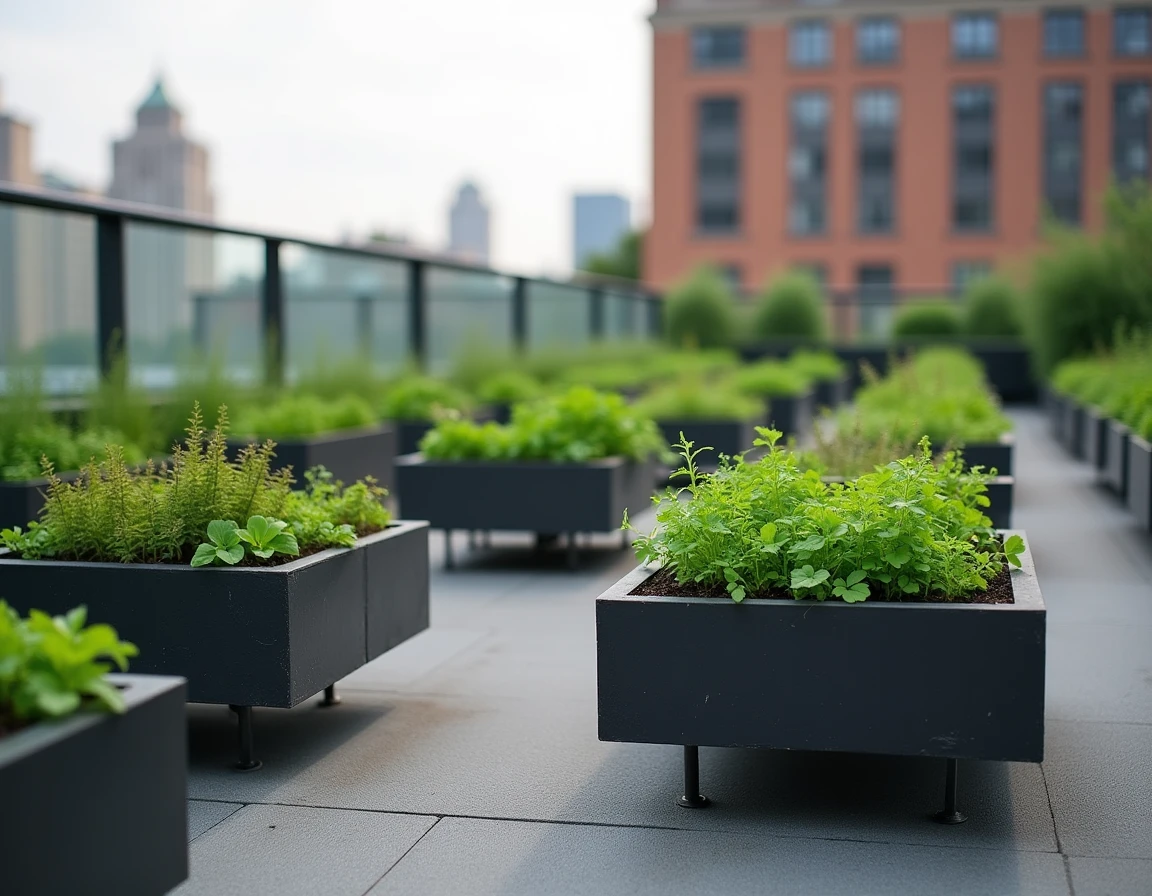
Self-supporting planters made of corten steel or powder-coated aluminum allow for the creation of shrub beds without touching the waterproofing. The adjustable legs absorb the roof slopes and maintain a ventilated crawl space under the planter.
This system allows for the relocation of plant compositions during maintenance on the membrane. Prefer planters that are at least 40 cm deep to install tall grasses (miscanthus, pennisetum) that filter the wind without blocking it.
4. Slabs on pedestals with draining joints
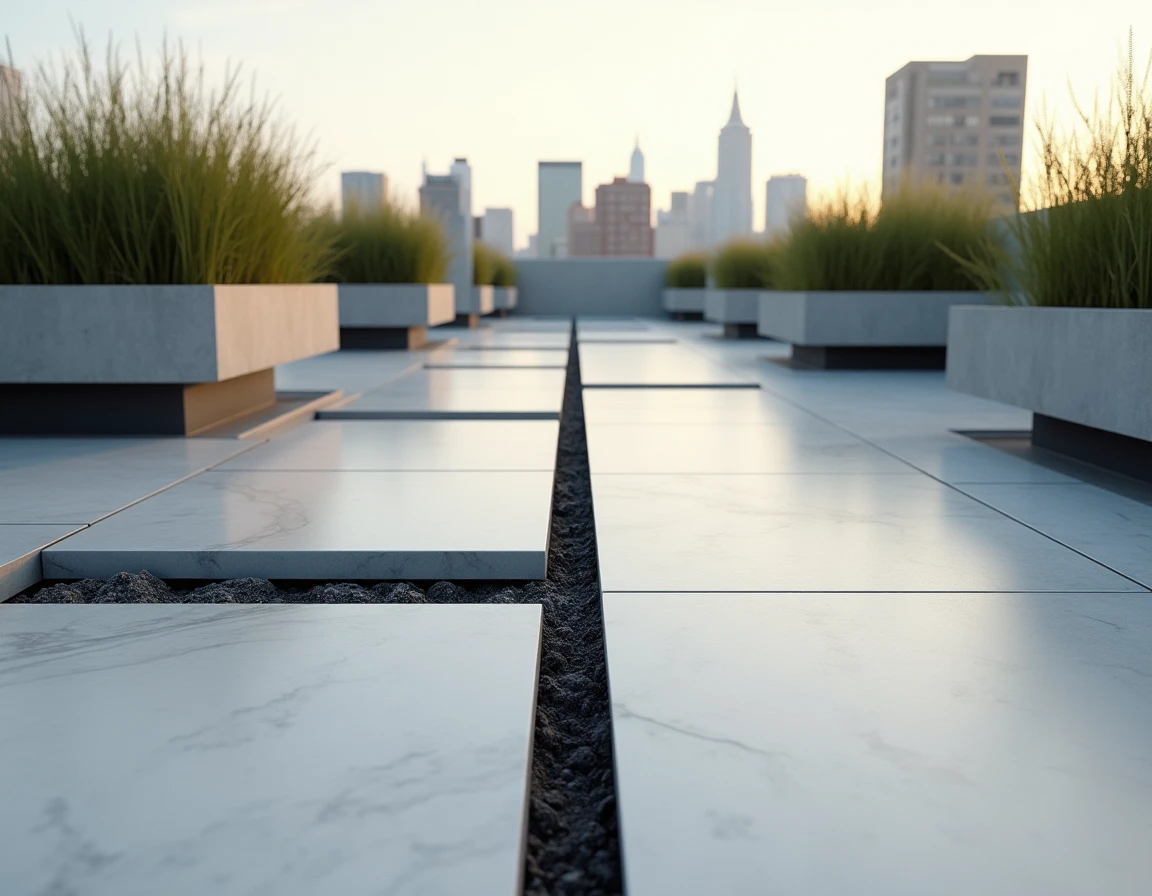
The decking on pedestals remains the most common flooring solution on rooftops. The slabs made of ceramic stone (two centimeters thick) or reconstituted stone rest on self-leveling pedestals that compensate for drainage slopes.
The open joints ensure drainage without a gutter, simplifying maintenance and preventing stagnation. Be cautious of the wind: slabs placed on the perimeter must be weighted or mechanically fixed if the building height exceeds several stories.
5. Recessed low-voltage lighting and plant marking
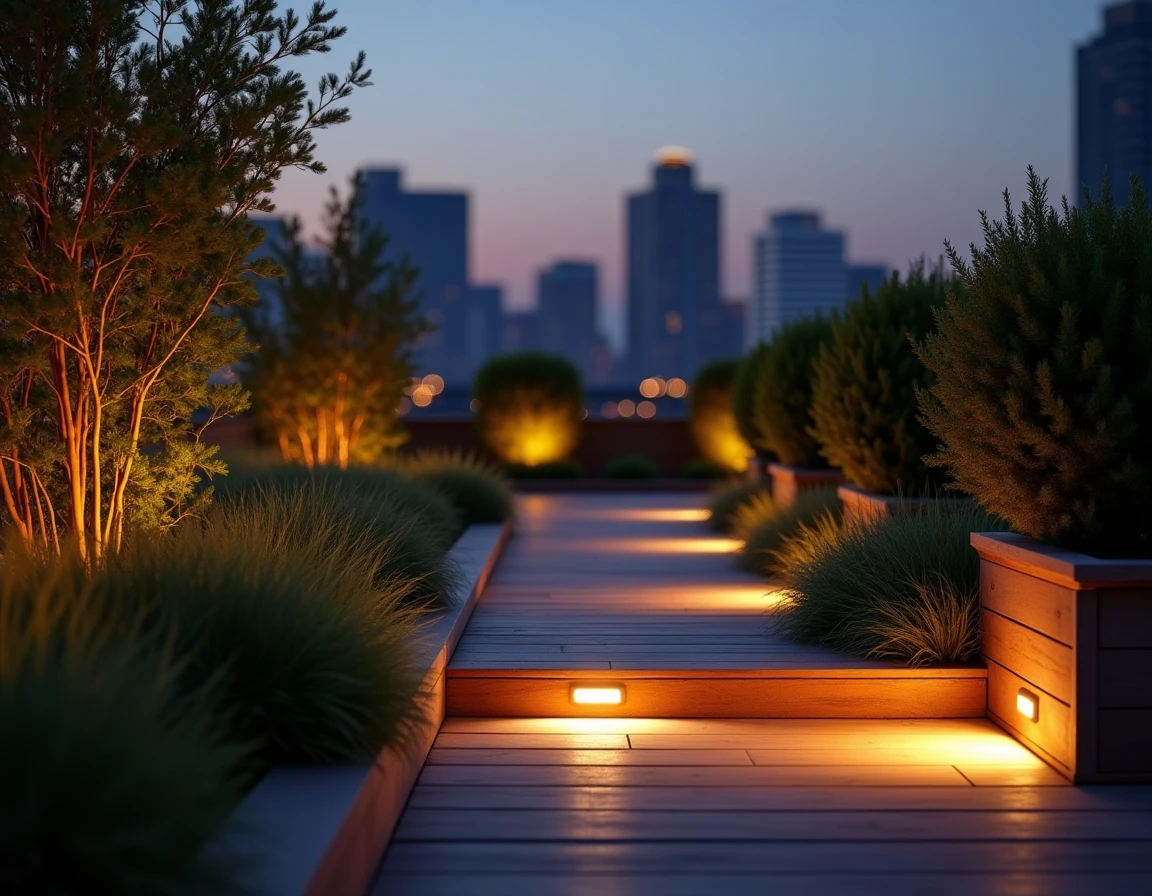
A successful lighting plan on a rooftop relies on three levels: ground marking (recessed LED spots), ambient lighting (garlands or strips integrated into the pergola), and highlighting plants with adjustable uplights.
Working in very low voltage (12 V or 24 V) eliminates electrical risks in humid environments and reduces cable size. Control by timer or twilight sensor prevents waste.
6. Vegetated windbreak lattice in metal mesh
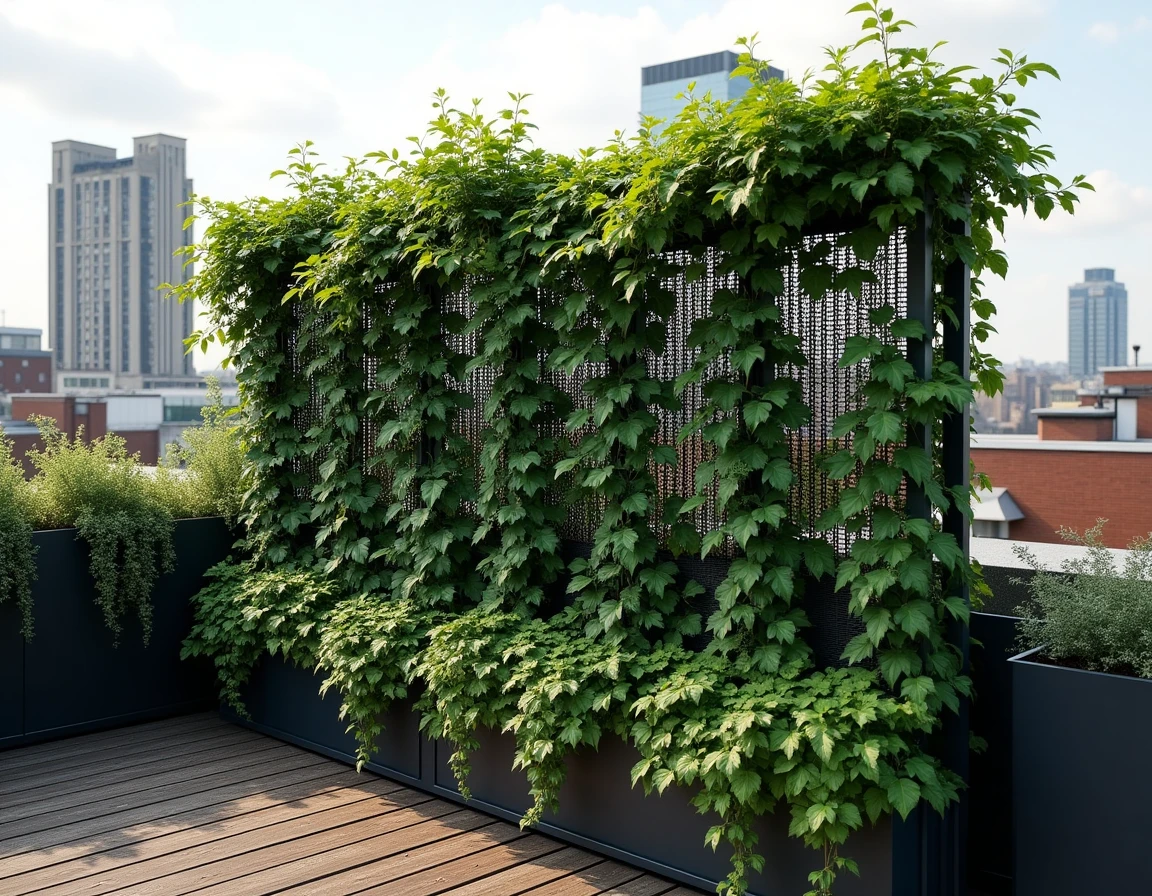
A solid windbreak generates turbulence downstream. A perforated metal mesh reduces wind speed without creating a venturi effect. Dressed with persistent climbing plants (ivy, honeysuckle), it also serves a landscaping and acoustic role.
The fixation is done on bolted plates in a parapet wall or weighted by gabions filled with pebbles. This solution avoids any perforation of the waterproof slab.
7. Elevated raised bed vegetable garden with integrated irrigation
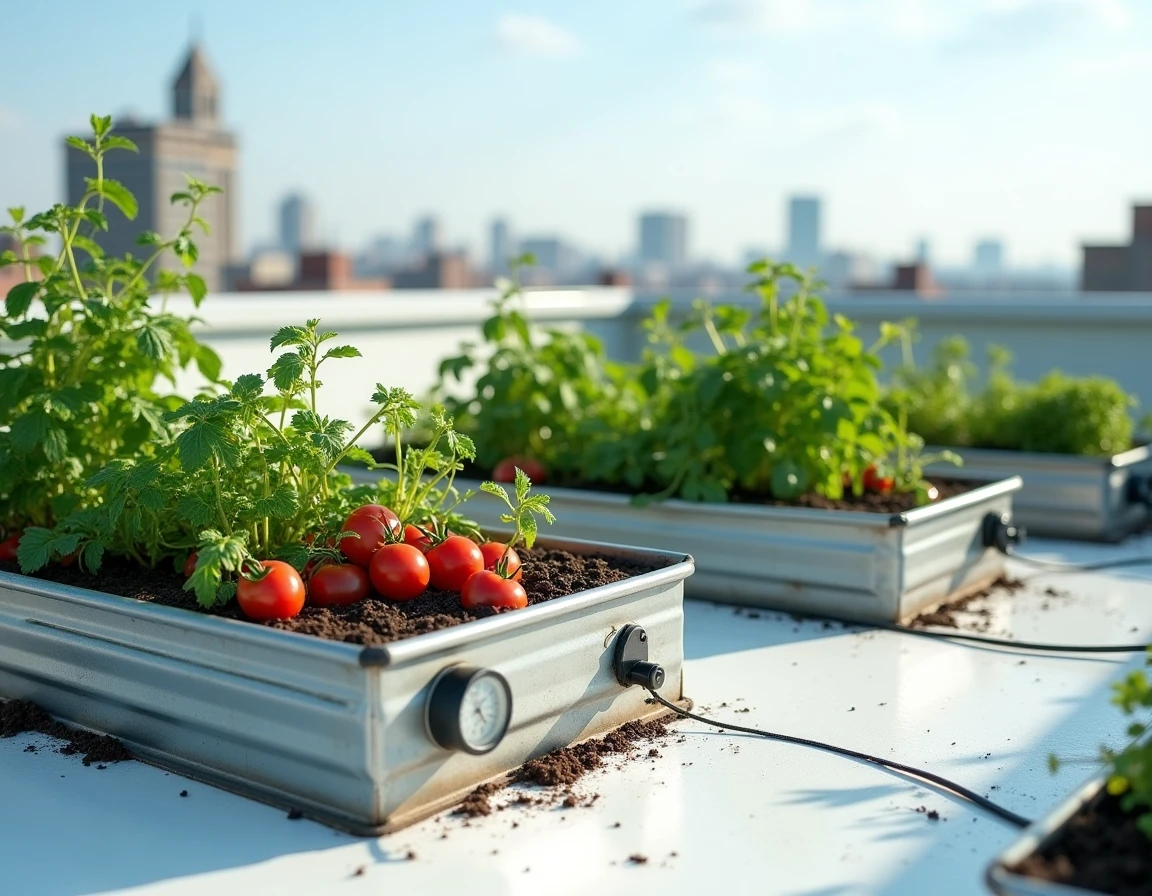
The urban rooftop vegetable garden becomes more relevant when designed as a technical module: treated wood planter class 4, draining bottom, integrated water reservoir, and programmable drip irrigation.
Herbs (thyme, rosemary, sage) and small fruits adapt well to rooftop conditions: wind, strong sunlight, thermal amplitude. We observe that substrates enriched with biochar improve water retention at low thicknesses.
8. Structural composite wood decking for rooftop terrace
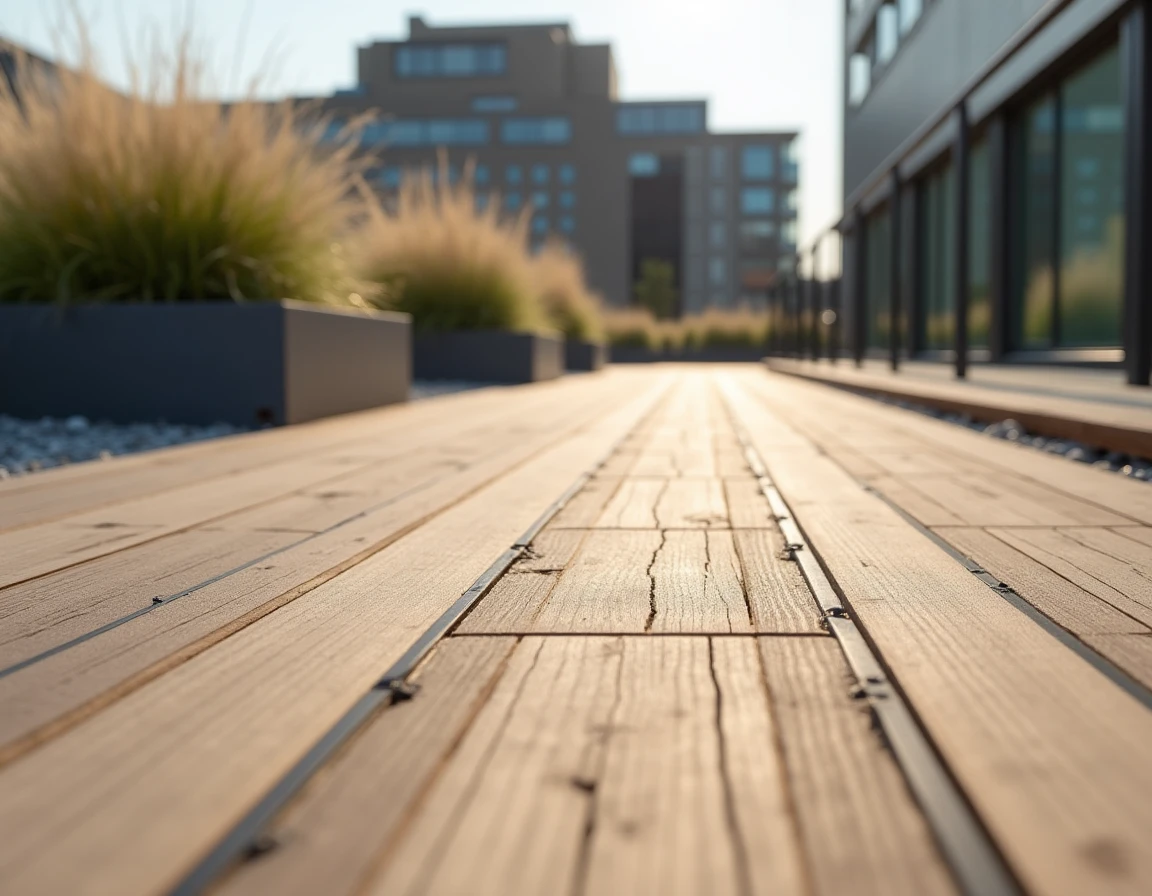
Next-generation composite wood (co-extruded, capped on four sides) resists UV and moisture better than natural wood, with almost no maintenance. The installation on aluminum joists clipped onto pedestals offers a lightweight and removable structure.
Check the slip resistance class (minimum R11) and thermal expansion of the profile: on a rooftop exposed to full south, insufficient expansion allowance can cause warping of the slats in summer.
9. Modular furniture and integrated storage in benches
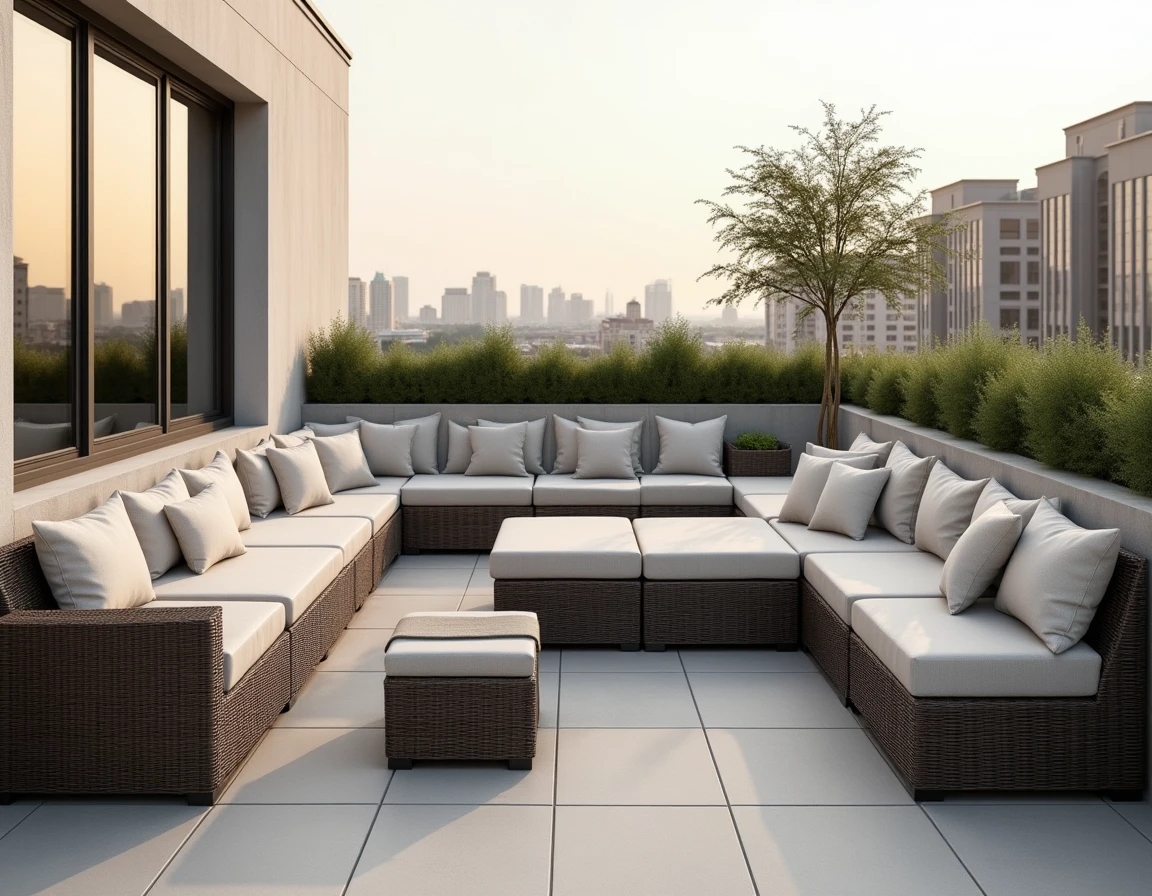
In a constrained space, multifunctional fixed furniture optimizes every square meter. Masonry or wooden benches with integrated storage replace seating, cushion storage, and side planters.
Folding tables fixed to the parapet wall free up circulation when not in use. Choosing weather-resistant materials (aluminum, high-density woven resin) limits the back-and-forth of storage.
10. Climate refuge roof with vegetative layers and rainwater management
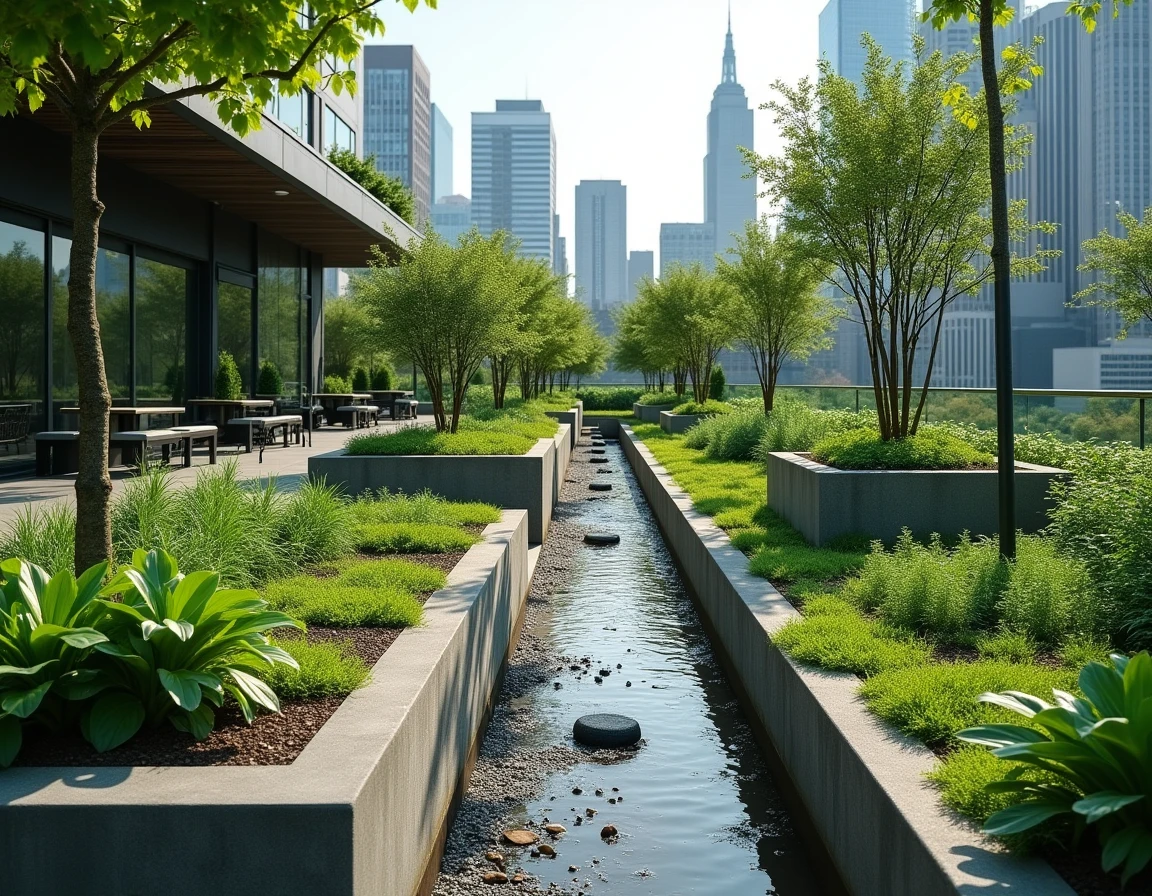
Recent specifications increasingly incorporate the notion of urban climate refuge: landscaped rooftops must contribute to the summer comfort of the building and local biodiversity. Several European cities are strengthening their greening or energy production obligations on new or heavily renovated roofs.
Concretely, this involves layering vegetative strata (sedum ground cover, medium grasses, shrubs in planters) that lower the surface temperature of the roof. The addition of temporary retention planters slows runoff during storm events.
- Sedum and succulent plants in mats for extensive coverage, low maintenance, and reduced weight
- Grasses and perennials in semi-intensive substrate for visual diversity and welcoming pollinating insects
- Persistent shrubs in deep planters to structure the space and create micro-shadows
The landscaped rooftop is no longer just a decorative extension of the home. Technical constraints (waterproofing, load-bearing, wind) guide every decision, from substrate to furniture. Combining these ten approaches according to the roof configuration and available budget remains the most reliable method to achieve a space that is both functional, sustainable, and aligned with current climatic requirements.