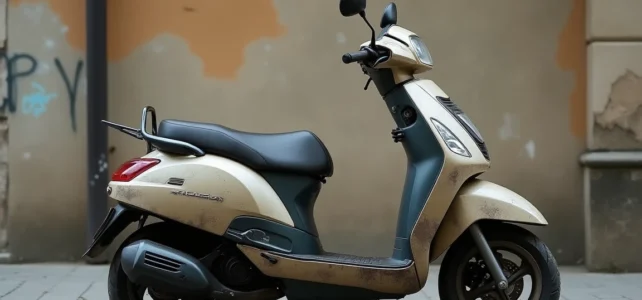
A used 125 scooter for commuting can easily accumulate several thousand kilometers per year. The question of maximum mileage arises with every used purchase and every service that costs a bit more than the last. Available data shows that there is no universal ceiling, but several measurable factors can help estimate how far a machine can reasonably go.
Availability of spare parts: the limit that the engine does not set
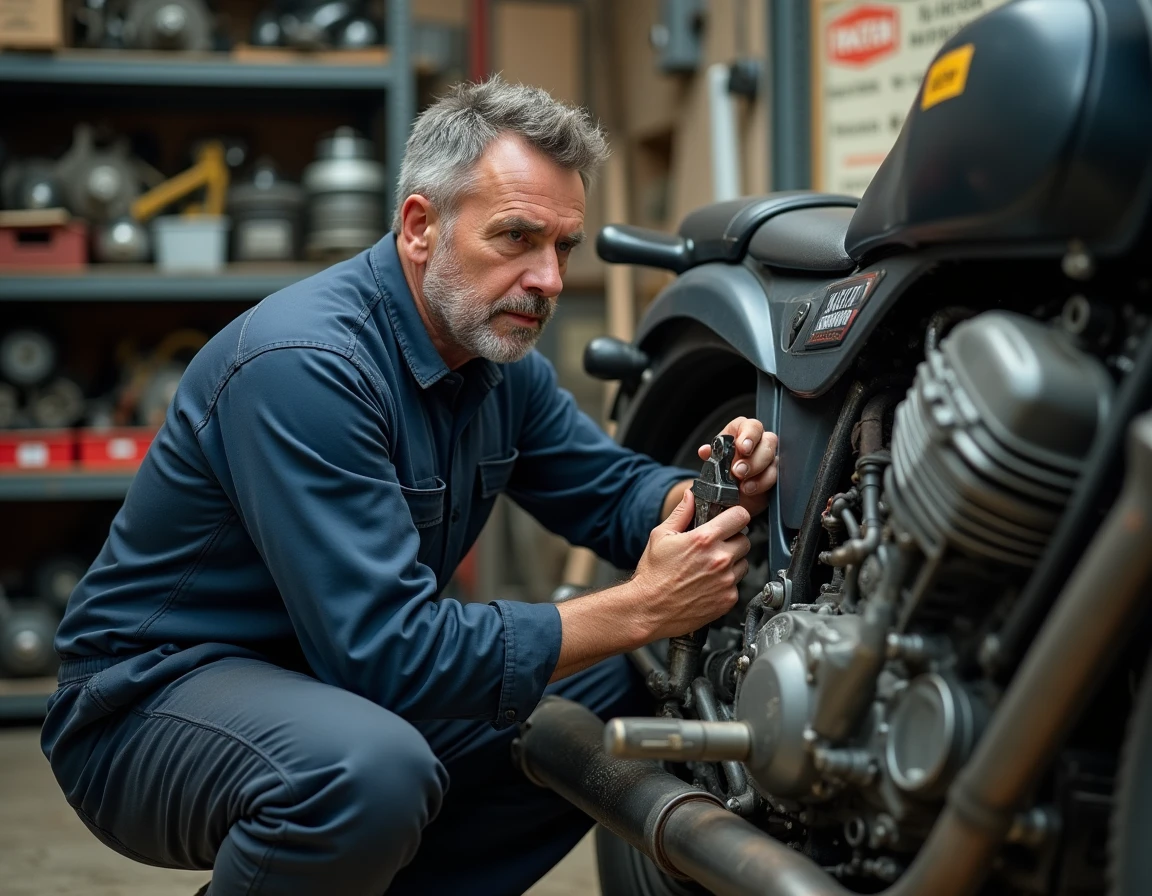
Competing articles focus on the engine and routine maintenance. They overlook a factor that ends a scooter’s life more abruptly: the inability to find replacement parts.
Since the implementation of the European regulation on ecodesign and French laws on planned obsolescence, manufacturers must announce a duration of availability for spare parts. For a new 125 sold, this duration is often a minimum of 5 years. After this period, nothing obliges the manufacturer to provide a fairing, wiring harness, or engine block.
In practice, Japanese brands (Honda, Yamaha, Suzuki) maintain a parts catalog for much longer than some Chinese manufacturers or niche brands. Asking how many kilometers for a 125 scooter also means checking if wear parts will still be available when the odometer shows high mileage.
An engine capable of running beyond 60,000 km is useless if the model-specific variator belt is no longer manufactured. The “economic” lifespan of a 125 scooter often ends before its mechanical lifespan simply because repairs become impossible or too expensive.
Realistic mileage of a 125 scooter: what field reports say
The ranges circulating online are broad. Feedback from owners and mechanics allows for three fairly clear tiers.
- Up to 30,000 km, a well-maintained 125 scooter generally does not pose major mechanical problems. Costs are limited to consumables (oil, pads, belt, tires).
- Between 30,000 and 50,000 km, repairs begin to weigh on the budget. The variator, centrifugal clutch, and sometimes the exhaust require more sustained attention.
- Beyond 50,000 km, reliability depends almost entirely on maintenance history and brand. Some Honda PCX or Yamaha XMAX reach significantly higher mileages, while other models show signs of structural fatigue.
Reaching 100,000 km is documented on Japanese models, with rigorous maintenance and regular driving. This is not the norm, but it is not an isolated feat either.
Field reports diverge on one point: the type of cooling. Liquid-cooled engines handle high mileages better than air-cooled engines, which suffer more in dense urban traffic. This technical distinction is rarely mentioned in used listings.
Climate and real conditions: an underestimated factor in the longevity of a 125
The theoretical lifespan of a 125 scooter assumes “average” usage conditions. Increasingly frequent heat waves alter this equation.
High temperatures accelerate the wear of several components simultaneously:
- Tires lose grip and wear out faster on overheated asphalt.
- Engine oil degrades more quickly, necessitating more frequent changes.
- The transmission belt, subjected to high temperatures in the casing, ages prematurely.
- The battery, exposed to engine heat and direct sunlight, loses capacity well before its nominal lifespan.
A scooter parked all day in the sun in southern France will not age at the same rate as a model parked in a basement in Lille. The actual climate of use can reduce longevity by several thousand kilometers, without the owner realizing it until a breakdown occurs.
Adapting maintenance to the climatic context (more frequent tire pressure checks, protecting the scooter from direct exposure, shortened oil change intervals in summer) mechanically extends lifespan. Available data does not allow for precise quantification of this gain, but specialized guides emphasize its significance.
Electric 125 scooter: the battery as a new limiting component
Existing content almost exclusively addresses thermal 125s. The fleet of electric 125 scooters is growing, and their lifespan logic is fundamentally different.
On a thermal 125, the engine, variator, and transmission set the mechanical limits. On an electric 125, the battery becomes the component that determines the end of the vehicle’s life. The electric motor, with very few moving parts, wears out infinitely slower than a thermal block.
The degradation of the battery depends on the number of charge cycles, storage temperature, and the manufacturer’s electronic management. After several years of daily use, capacity gradually decreases, reducing range without necessarily preventing the scooter from running.
The cost of replacing a battery for an electric 125 represents a significant fraction of the price of a new vehicle. When the battery reaches a threshold of advanced degradation, the question is no longer mechanical but financial: is the replacement worth it compared to the residual value of the scooter?
Feedback on the actual longevity of electric 125 batteries remains limited, as the market is recent. The first generations of electric 125s do not yet have enough data to establish reliable averages comparable to the data accumulated on thermal models.
The maximum mileage of a 125 scooter is not just about the robustness of its engine. The availability of parts, the climate of use, and for electric models, the battery lifespan set limits that maintenance alone cannot extend. Checking these three parameters before a purchase, especially used, remains the most reliable way to avoid a nasty surprise halfway through.