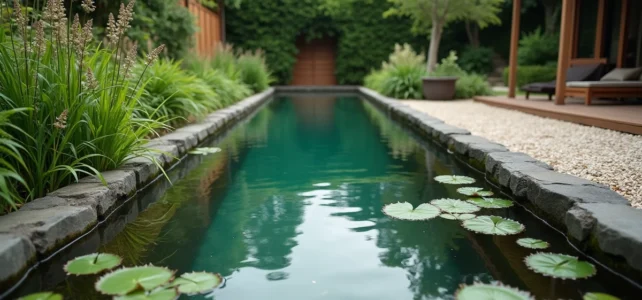
In a traditional pool, the skimmer is the small rectangular trap embedded in the wall. It sucks in the surface layer of water, which collects leaves, insects, and greasy film. Removing this component means rethinking the entire hydraulic circulation of the pool. The idea appeals to owners who want a cleaner look, closer to a natural body of water, but it raises concrete questions about filtration and regulatory compliance.
Perimeter slot and mirror pool: what really replaces the skimmer
Have you ever seen a pool where the water seems to flow over the terrace, with no visible edge? This type of installation, called mirror pool or perimeter overflow pool, is the main alternative to the traditional skimmer. The water does not disappear into a trap: it glides through a narrow slot that runs along the pool, into an underground catch basin.
This catch basin collects the water, directs it to the filtration unit, and then reinjects it through the bottom or walls. The function of the skimmer (to capture surface pollutants) is therefore preserved but redistributed around the entire perimeter. The visual result is striking: the waterline disappears, and the pool looks like a mirror set on the ground.
To learn everything about the pool without a skimmer, you first need to understand that the term encompasses very different realities. A mirror pool remains a complete technical system, with a pump, filter, and disinfection. It does not eliminate mechanical filtration; it relocates it.

Biological swimming pond: plant filtration has its limits
The other category of skimmer-free pools is biological swimming ponds. The principle is based on two distinct areas: a swimming area and a planted regeneration area. Aquatic plants, installed in a gravel substrate, host microorganisms that break down organic matter. Water circulates between the two areas thanks to a discreet pump.
On paper, no chemicals are necessary. Nitrogen and phosphorus are absorbed by the plants, limiting algae proliferation. Swimming is gentle on the skin, with no chlorine smell.
The trap of absent pre-filtration
Feedback from specialized forums tells a more nuanced story. The majority of biological ponds eventually integrate mechanical pre-filtration after a few seasons. Dead leaves, pollen, and insects accumulate on the surface without a skimmer, overloading the regeneration area and destabilizing the system.
In practice, owners often add:
- A motorized surface net or a floating robot that collects debris before it sinks
- A basket pre-filter upstream of the circulation pump, to protect the planted substrate
- A handmade surface skimmer, which serves exactly the same function as a traditional skimmer, under another name
The total absence of surface recovery is still possible in very wind-protected ponds, surrounded by little tall vegetation. In most French gardens, this is a rare configuration.
French regulations: a pond without a skimmer remains a pool
Do you think a biological pond escapes the administrative constraints of a pool? In France, a biological swimming pond is legally considered a pool as long as its primary use is swimming. Administrative doctrine and recent case law confirm this.
This entails several concrete obligations:
- A prior declaration of works (or a building permit depending on the surface area) is required
- Safety rules against drowning apply (barrier, alarm, cover, or shelter)
- For ponds open to the public, water quality checks are mandatory, even without chemical treatment
Marketing speeches around the “100% natural” pond often overlook these obligations. Building without a skimmer does not mean building without a legal framework.
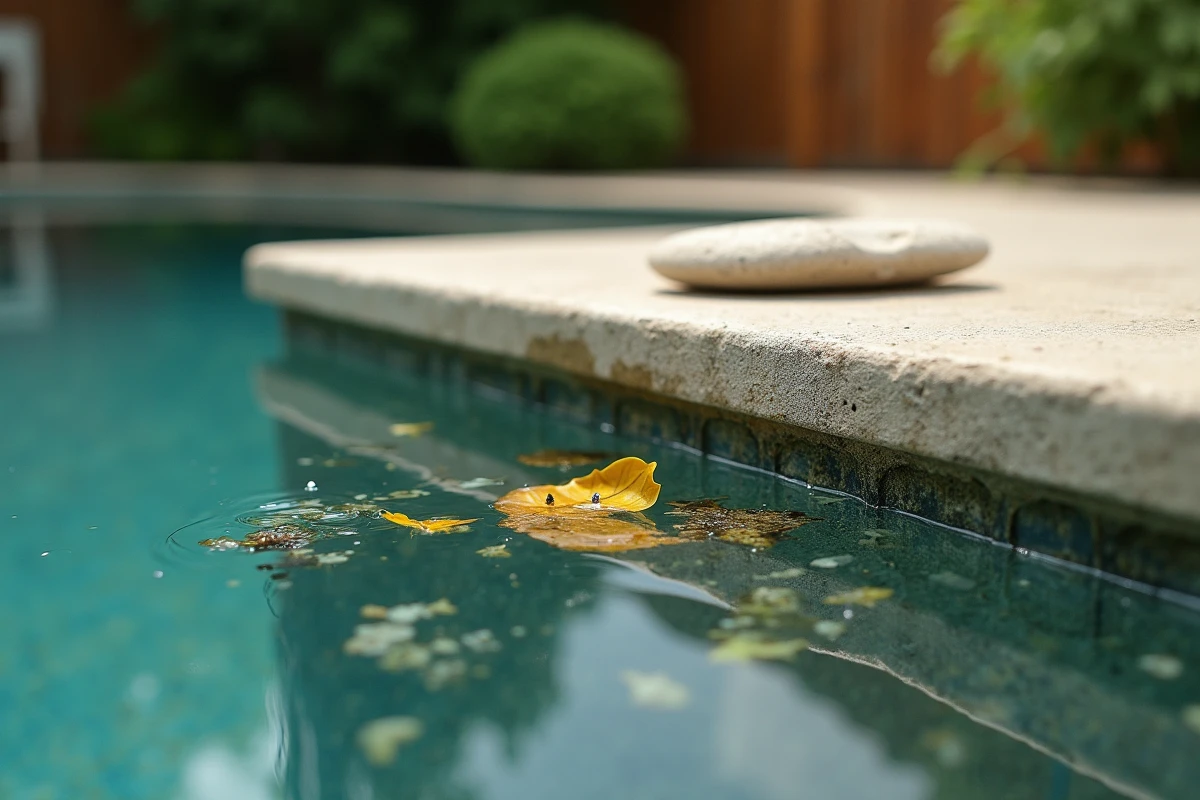
Maintenance of a pool without a skimmer: what changes on a daily basis
In a skimmer pool, surface maintenance consists of emptying the basket once or twice a week. Without this trap, managing floating debris becomes more manual or relies on additional equipment.
The catch basin of a mirror pool requires regular monitoring: its water level varies with evaporation and splashes. A float or an automatic filling system is almost essential to prevent the pump from running dry.
Biological pond: a seasonal calendar
For a natural swimming pond, maintenance follows the plant cycle. In spring, the regeneration area restarts: the plants regrow, and bacteria recolonize the substrate. In summer, monitoring focuses on the balance between light, water temperature, and organic load. Even a slight imbalance causes rapid greening.
In autumn, aquatic plants need to be trimmed, and dead leaves removed before they decompose in the pond. In winter, the system slows down but continues to operate at low capacity. This cycle requires regular involvement, quite different from the automated chemical treatment of a traditional pool.
Choosing between a mirror pool and a biological pond without a skimmer
The choice depends on what you expect from the pool. The mirror pool offers a high-end aesthetic while maintaining traditional filtration and disinfection. It suits owners who want to eliminate the visible skimmer without changing their maintenance habits. The additional cost compared to a skimmer pool is significant, mainly due to the catch basin and the perimeter slot.
The biological pond is aimed at those who accept more artisanal maintenance and a less “pool-like” appearance. The quality of the water depends on a biological balance that the owner must understand and support. It is as much a garden project as a swimming project.
In both cases, removing the skimmer does not eliminate the need to capture surface pollutants. The difference lies in the method: mechanical slot integrated into civil engineering, or manual and biological management. Neither option is a myth, but neither exempts from a filtration system designed from the outset.