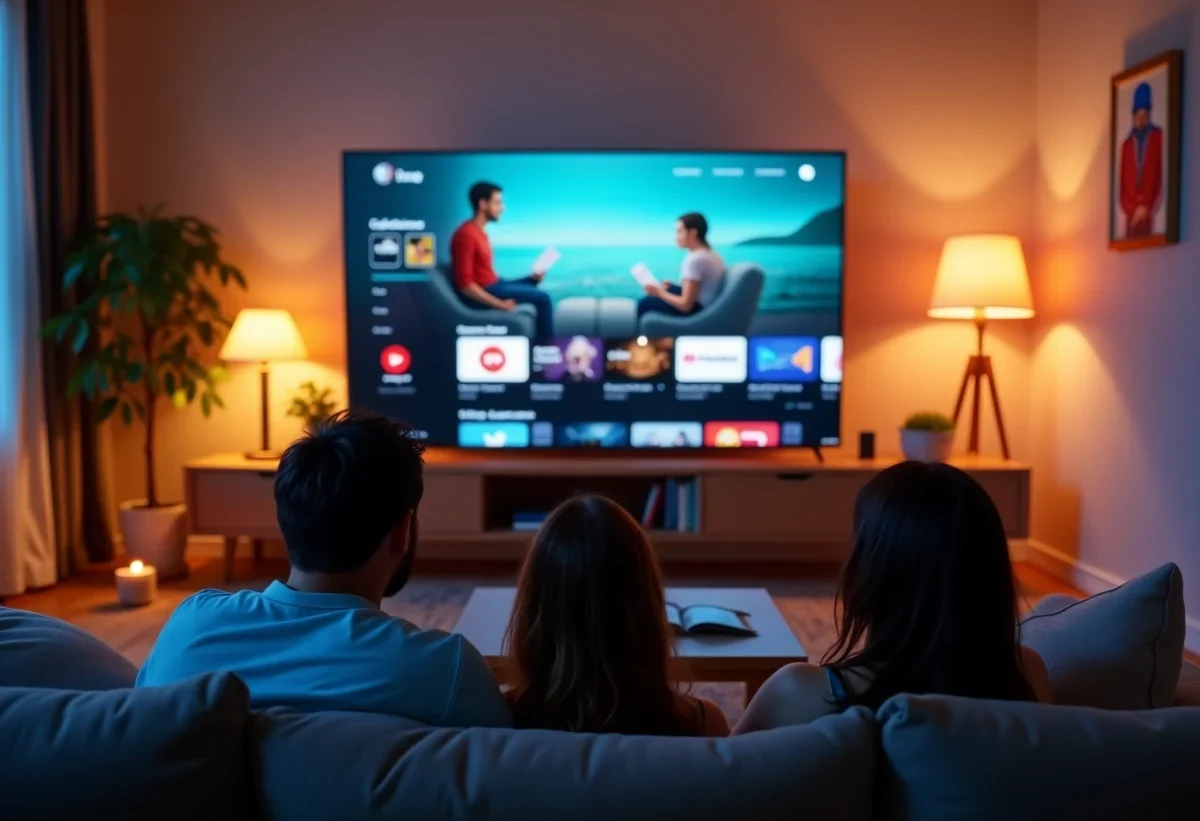
Online streaming platforms are experiencing a true revolution. With the rise of artificial intelligence technologies and recommendation algorithms, the content offered is becoming increasingly personalized. Users thus benefit from a tailored experience, adapted to their tastes and viewing habits.
At the same time, interactivity and immersion are gaining ground. Innovative features, such as choose-your-own-adventure series and virtual reality concerts, allow viewers to engage more deeply with what they are watching. A new era is opening for entertainment, where the viewer becomes an actor in their own content.
The Reign of SVOD Platforms
Empire Streaming has transformed the way we consume audiovisual content. SVOD (Subscription Video on Demand) platforms now dominate the media landscape by offering a vast range of movies, series, and documentaries accessible at any time. In France, the adoption of these services has been rapid.
Diverse Offers
Users can choose from a multitude of services, each offering original and exclusive content. These platforms attract with quality productions, often nominated for the biggest award ceremonies. The value for money of subscriptions appeals to an ever-wider audience.
- Captivating original series
- Constantly improving video quality (Full HD, 4K, HDR)
- Uninterrupted access to content
A Rapidly Expanding Market
The subscription video-on-demand market is experiencing exponential growth. Revenue figures are now in the billions of dollars, with millions of subscribers worldwide. This success is due to the platforms’ ability to adapt to consumer expectations and innovate constantly.
| Platform | Number of Subscribers (in millions) | Revenue (in billions $) |
|---|---|---|
| Platform A | 200 | 25 |
| Platform B | 150 | 18 |
Upcoming Challenges
SVOD platforms must nonetheless face several challenges to maintain their hegemony. Competition is intensifying and user expectations are rising. Video quality and the diversity of content remain key criteria. In this race for innovation, only platforms capable of offering an exceptional user experience will stand out. 
The Emergence of Live Streaming on Social Media
Live streaming is experiencing unprecedented growth on social media. This new trend allows users to broadcast events in real-time, creating immediate interaction with their audience. Social platforms like Facebook, Instagram, and Twitter have integrated live streaming features to meet this growing demand.
Video quality, enhanced by 4K and HDR technologies, offers an immersive visual experience. 5G, by enabling faster and more stable connections, allows for uninterrupted live broadcasting, even in high definition. These technical advancements make live streaming more accessible and appealing to a wide audience.
- Real-time broadcasting
- Immediate interaction with the audience
- Improved video quality thanks to 4K and HDR
- Stable and fast connection with 5G
The Live Shopping Phenomenon
Live streaming also facilitates the development of live shopping. This practice, originating from Asia, is gaining popularity in Europe and the United States. It allows brands to showcase their products live, offering an interactive shopping experience. Users can ask questions in real-time and receive immediate answers, making the shopping process more engaging.
Live shopping is particularly popular in the fashion, beauty, and electronics sectors. Influencers play a key role in hosting these sessions, attracting thousands of viewers and potential buyers. This trend is transforming the way consumers discover and purchase products online.
Technical and Regulatory Challenges
Although promising, live streaming on social media faces technical and regulatory challenges. The protection of personal data and the moderation of live content represent major issues. Platforms must invest in detection and filtering technologies to ensure broadcasts comply with ethical and legal standards.
The integration of advertising into live streaming sessions raises questions about the transparency and authenticity of content. Users expect authentic experiences that are not biased by commercial interests. Therefore, platforms must find a balance between monetization and the integrity of the content being broadcast.