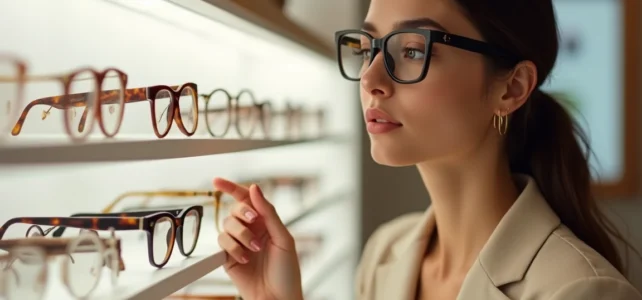
Choosing a pair of prescription glasses means balancing what looks good today with what will still be comfortable to wear in a year. Recent collections reflect a fundamental shift: materials are changing, shapes are stabilizing around bolder silhouettes, and wearing comfort is becoming a selling point on par with style. Here are the key factors that will truly shape choices in 2024.
Bio-sourced acetate and lightweight titanium: materials that enhance everyday comfort

Have you ever noticed that feeling of pressure on the bridge of your nose by the end of the day? It often comes from the weight of the frame. This is precisely the issue that new materials aim to address.
Bio-sourced acetate is gradually replacing traditional acetate in mainstream ranges. It is more flexible, slightly lighter, and its production generates less petrochemical waste. Brands like Etnia Barcelona have integrated it into their main collections, not just in a separate “eco” line.
Ultra-light titanium and beta-titanium follow the same trajectory. These alloys offer high mechanical strength for reduced weight on the nose. The frame becomes unnoticeable after a few minutes of wear, even on models with bold lines.
Several manufacturers now offer these materials in core market ranges, which means the additional cost compared to a standard frame has significantly decreased. To explore the new trends in prescription glasses on Optisanté, this evolution in materials is a good starting point before choosing a shape.
Repairable and modular frames: an underestimated selection criterion
When a temple breaks or a hinge fails, most wearers buy a complete new pair. This reflex is costly and generates unnecessary waste.
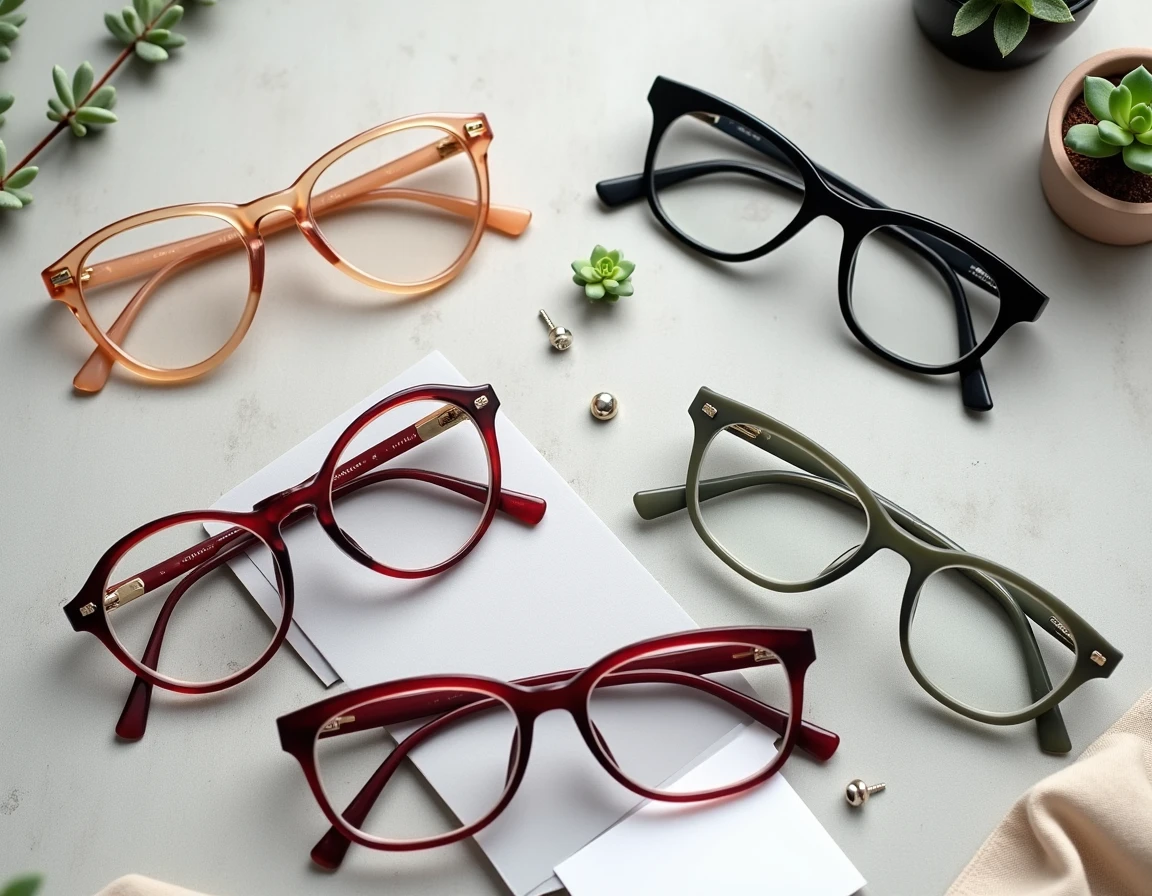
Some designers and manufacturers now offer glasses with interchangeable temples and accessible screw hinges. This means that an optician (or the wearer themselves) can replace a bridge piece, change the color of the temples, or tighten a hinge without specialized tools.
This modularity concept extends the lifespan of the frame without compromising comfort. It also allows for style evolution of an existing pair, for example, switching from black temples to colorful ones for summer. The “2024 trends” pages mention it little, but it’s a criterion that impacts long-term satisfaction.
What repairability changes in practice
- A replaceable hinge prevents discarding a frame whose lenses are still suitable for the current prescription
- Interchangeable temples allow for adapting the look without buying a complete new pair, reducing the annual cost of optical equipment
- Standard screw frames are easier to adjust at any optician, not just the one who sold the pair
Frame shapes and face morphology: balancing trend and aesthetic durability
Oversized shapes and retro silhouettes dominate the displays. However, a trendy frame that doesn’t suit the geometry of the face ends up in a drawer after a few months.
A useful concept to avoid this trap is a tolerance for aesthetic regret at eighteen months. Before finalizing a choice, ask yourself if you will still like this shape in a year and a half. A very distinctive frame (XXL butterfly, extreme cat-eye) becomes tiresome faster than a slightly oversized but balanced shape.
Adapting the shape to the face without sacrificing style
The basic principle remains simple: the frame should create a soft contrast with the dominant shape of the face. A round face gains structure with angular lines. An elongated face supports wide shapes that break verticality.
3D virtual try-ons, now offered by several retailers, help visualize this contrast before purchase. These tools also serve to compare a very trendy frame with a more classic option based on wear frequency. If you wear your glasses twelve hours a day, prioritize comfort and versatility over fashion impact.
Colors and finishes: what distinguishes the 2024 collections
Color gradients on the frame itself (not on the lenses) mark recent collections. The principle: a shade that gradually transitions from a dark tone at the top of the frame to a lighter tone towards the bottom, or vice versa.
The effect is subtler than a block of bright color. It draws attention without overwhelming the features of the face. Honey, amber, and sage green tones regularly reappear, alongside classic blacks reinterpreted with marbled reflections.
Transparent frames remain present but evolve towards slightly tinted versions rather than completely colorless. This slight color veil adds character without hiding the gaze, which is particularly suitable for fair skin and low optical corrections where the lens remains thin.
Choosing a color that lasts
- Neutral shades (tortoiseshell, matte black, translucent gray) transcend seasons without looking dated
- Bright colors work better on a second pair, worn alternately
- A discreet gradient adds a touch of personality while remaining compatible with a professional frame
- Bio-sourced acetate retains its color better over time than some classic injected plastics
The choice of a pair of prescription glasses in 2024 hinges on a balance between material, shape, and color. The most satisfying frames in the long term are those that combine a lightweight material, a shape suited to the face, and a shade that you won’t regret after a few months. Ultimately, the most useful trend is the one that makes the pair feel invisible due to its comfort.